Democrats Target Three-Seat House Gain Amid New Maps and Cost of Living
With all 435 seats up for grabs, Democrats need a net gain of three districts to reclaim the House, facing a Republican money edge and redistricting challenges in seven states.
By Gabriel Serrano ·
As polls open across the nation on Tuesday, November 3, 2026, the fate of the U.S. House of Representatives hinges on a razor-thin margin. All 435 seats are up for election, a decision that will determine who controls the chamber for the final two years of President Donald Trump's second term. Republicans currently hold 218 seats while Democrats hold 214, with one independent and some vacancies. This configuration means Democrats need a net gain of three districts to secure a majority, whereas Republicans can afford to lose no more than two seats without ceding control.
The Associated Press describes the election as a referendum on the administration, with many voters expressing frustration over high prices and an unpopular war with Iran. Polling by the AP and NORC indicates that 35% of U.S. Adults approve of Trump's job performance, while only 25% approve of his handling of the economy. Approximately seven in ten adults say the country is heading in the wrong direction, with most blaming the president for rising costs. These sentiments are driving a focus on the cost of living and health care, key issues for Democratic candidates who are campaigning on promises of oversight and economic relief.
Ballotpedia identifies 46 battleground districts as the primary flashpoints for the House race. Of these, 25 are currently held by Democrats and 21 by Republicans. The competitive nature of these districts is heightened by recent redistricting efforts. Six states, including California, Florida, Missouri, North Carolina, Tennessee, and Texas, are using new congressional maps, with Ohio also adopting a new layout. These changes have altered the political geography of these states, creating new opportunities and challenges for candidates from both parties.
Democrats face a significant financial and structural hurdle in their bid to gain the three seats required for a majority. The 2026 elections are likely to be the most expensive in history. Republican committees have outraised and outspent their Democratic counterparts, bolstered by funds from Trump-affiliated groups and Elon Musk. An analysis of AdImpact data shows that 88.1% of Republican general election TV ad spending is directed at states and districts Trump won in 2024, including more than $850 million in areas where he won by 10 points or more. This spending strategy aims to entrench Republican incumbents and defend the party's current majority.
Despite the Republican money advantage, Democratic figures suggest a cautious optimism. Rep. Suzan DelBene, Chair of the Democratic Congressional Campaign Committee, stated, "The American people are angry. They want change." This sentiment is echoed by voters like James Moore, a 57-year-old librarian in Raleigh, North Carolina, who noted, "I'm paying more taxes. I'm paying more for my healthcare. I'm paying more for everything." Democrats hope to leverage this economic anxiety to flip the 21 Democratic-held districts that voted for Trump in 2024, while also defending the nine Republican-held districts that voted for Kamala Harris.
The redistricting process has been a central theme in the campaign, with Republicans attempting to beat the historical pattern of a president's party losing seats in midterm elections. However, the new maps in Florida and other states may not vote as initially drawn. This uncertainty adds a layer of complexity to the 46 battleground districts. Democrats are focusing on oversight of the administration, a priority that could intensify if they gain control of the House. House Democratic Leader Hakeem Jeffries, who would become the first Black speaker if Democrats win, has outlined a 100-day agenda focused on the cost of living and government oversight.
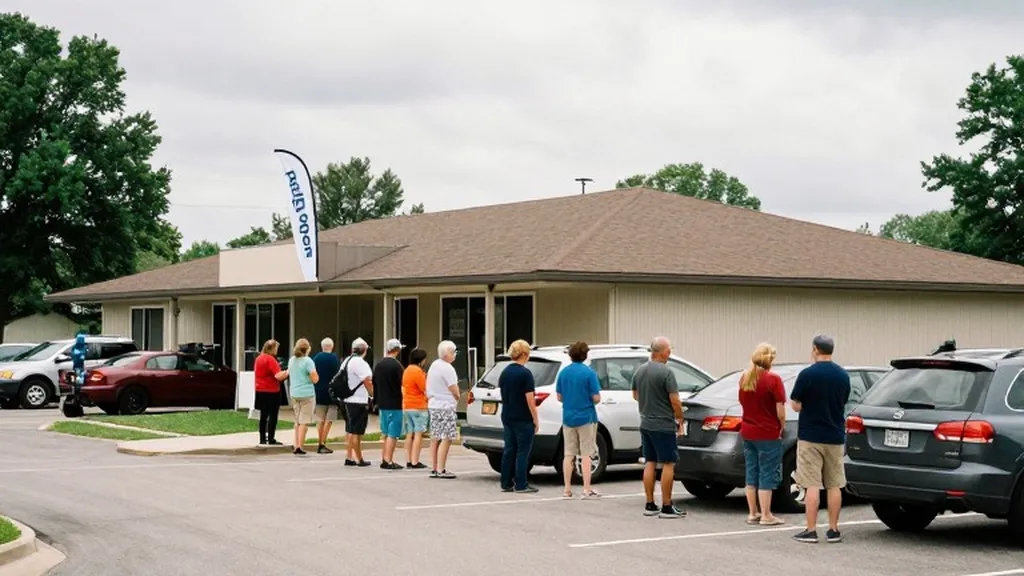
Voter turnout is expected to be high, with more than 57 million people having already voted as of Monday, surpassing early vote totals from four years ago in many closely watched states. The Associated Press notes that Republicans are bracing for the possibility of losing the House, with some candidates keeping their distance from the president's rallies. Trump ended his recent rally schedule in Salina, Kansas, telling voters, "I really want you to pretend I'm on the ballot." His continued presence on the campaign trail has been a key factor in mobilizing the Republican base, despite some internal tensions.
Administrative issues have also played a role in the pre-election period. A federal judge temporarily barred the Trump administration from carrying out a plan to prevent noncitizen voting, a move critics said risked disenfranchising eligible voters. Additionally, a judge ordered the administration to stop demanding that California election officials segregate ballots cast by people on lists of suspected noncitizens. These legal battles have heightened concerns about election integrity, with Democrats fearing interference and intimidation as the Justice Department threatens to prosecute local election officials.
The outcome of the House race will have significant implications for the balance of power in Congress. If Democrats win even one chamber, investigations and possible impeachment proceedings become likely. A strong Democratic performance could also boost potential 2028 candidates, including Gavin Newsom, JB Pritzker, and Pete Buttigieg, while complicating the path for Vice President JD Vance. As voters head to the polls, the focus remains on the 46 battleground districts and the new maps in seven states, where the three-seat margin that will decide the House majority is likely to be decided.
Wall Street is also watching the results, with Reuters noting that the outcome could add to investor concerns about AI spending and debt ceiling negotiations. The U.S. Postal Service has added hours, staff, and special lines to ensure mail ballots are counted on time, reflecting the high stakes of the election. As polls close, the nation awaits the final tally that will determine the direction of the House in the coming years.