Tesla's Self-Driving Future Arrives in 2027, But Only in Specific City Zones
The company has set a new target for unsupervised driving, though it will initially apply only to vehicles operating within its managed Robotaxi network rather than general consumer use.
By Gabriel Serrano ·
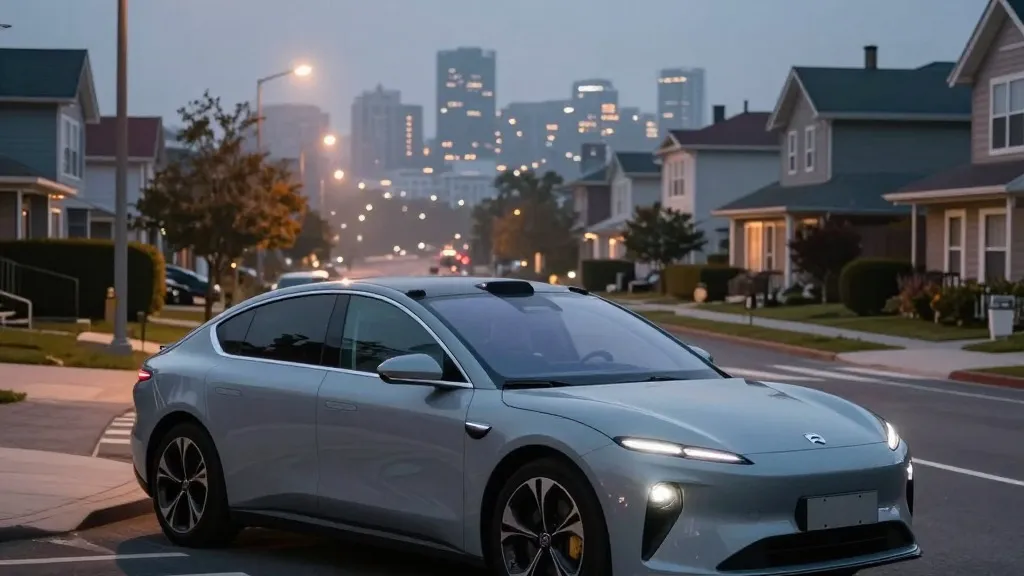
Tesla has officially pushed the arrival of unsupervised Full Self-Driving (FSD) in customer-owned vehicles to the second quarter of 2027. This latest date marks another shift in a timeline that CEO Elon Musk has been refining for nearly a decade, continuing a pattern of moving goals for buyers who have paid for the technology since 2016.
The primary implication of this announcement is a significant narrowing of the product definition. During the Q3 2026 earnings call, Ashok Elluswamy, Tesla’s AI chief, clarified that the initial rollout will not be a standalone software update that allows owners to drive their personal cars anywhere. Instead, the first step involves integrating individual owner vehicles into Tesla’s existing managed Robotaxi fleet. Essentially, the car does not become a standalone autonomous vehicle for the owner’s daily use; it becomes a part of a company-run service.
This distinction addresses a key question from retail shareholders, who submitted a query backed by approximately 1.1 million shares asking when unsupervised FSD would be available in their personal cars. Elluswamy’s response indicated that owners will be able to add their vehicles to the Robotaxi network, meaning the cars will only drive themselves without supervision within the specific geographic areas where Tesla already operates its Robotaxi service.
The current operational footprint for these Robotaxi zones is limited. Tesla’s service is active in six U.S. metropolitan areas, but the serviceable areas often cover only small slices of those cities. For example, the Miami zone primarily includes West Miami and a strip extending toward Doral and Sweetwater, while Orlando and Tampa launched in July with similarly restricted geofences. Within these areas, the vehicles generally avoid highways and stick to lower-speed routes, bypassing more complex driving environments.
Regulatory and operational constraints further limit the scope. In the Bay Area, the service is not yet fully unsupervised because California regulations require a safety driver for systems beyond a certain level of autonomy, a requirement Tesla has not yet satisfied with the DMV. Additionally, the fleet size remains modest. By the end of Q3, Tesla reported nearly 2 million cumulative unsupervised miles, a figure that includes the recent addition of the Cybercab to the Austin fleet. Third-party tracking suggests that only dozens of fully driverless Teslas are currently on the road, a stark contrast to the hundreds of thousands Musk has previously envisioned.
Critics note a disconnect between the original marketing promise and the current reality. For years, the pitch to FSD buyers was that a software update would eventually allow the car to drive itself anywhere. In July 2025, Musk stated that unsupervised FSD would be available for personal use in certain geographies by the end of that year. A year prior, he expressed confidence that the technology would be ready the following year. However, owners of vehicles with the HW3 hardware have already been informed that their cars cannot run unsupervised FSD, with no clear upgrade path provided.
The new Q2 2027 target represents a shift from a consumer-facing feature to a fleet-integration tool. The product is now defined as a car that joins Tesla’s fleet, operates within Tesla’s controlled zones, and follows Tesla’s operational rules. This excludes long-distance highway trips or cross-town commutes unless the user’s home and workplace happen to fall within one of the limited Robotaxi geofences.
Elluswamy acknowledged that safety remains the primary bottleneck, explaining why the technology is currently restricted to lower-speed roads and simpler environments. He estimated that these safety issues could be resolved by next year, though he admitted the company is still refining its projections. For Midwest readers, the takeaway is that while the technology is advancing, the immediate benefits are geographically restricted and operationally specific, rather than a universal upgrade for every car in the driveway.