Humanoid Robotics: Tesla delays Optimus external sales to late 2027
Tesla CEO Elon Musk announced that the company’s humanoid robot will not reach outside customers until the end of 2027, citing unresolved issues with the robot's hands and AI capabilities.
By Adrian Romano ·
Tesla has pushed back the timeline for delivering its Optimus humanoid robots to external customers until the end of 2027. During the company’s third-quarter 2026 earnings call, CEO Elon Musk explained that the robot’s hands, durability, and artificial intelligence require further development before the unit can be sold to industrial partners. This update marks the latest shift in the schedule for a technology that has faced repeated delays since its initial announcement.
The delay comes as Tesla begins early production of the Optimus on its high-volume assembly line in Fremont, California. This facility previously manufactured the Model S and Model X vehicles. While the line is designed to eventually produce one million robots annually, or roughly 20,000 units per week, Musk indicated that reaching full capacity will take at least a year. He attributed this timeframe to ongoing changes in the robot’s design, particularly regarding the electromechanical components and reliability.
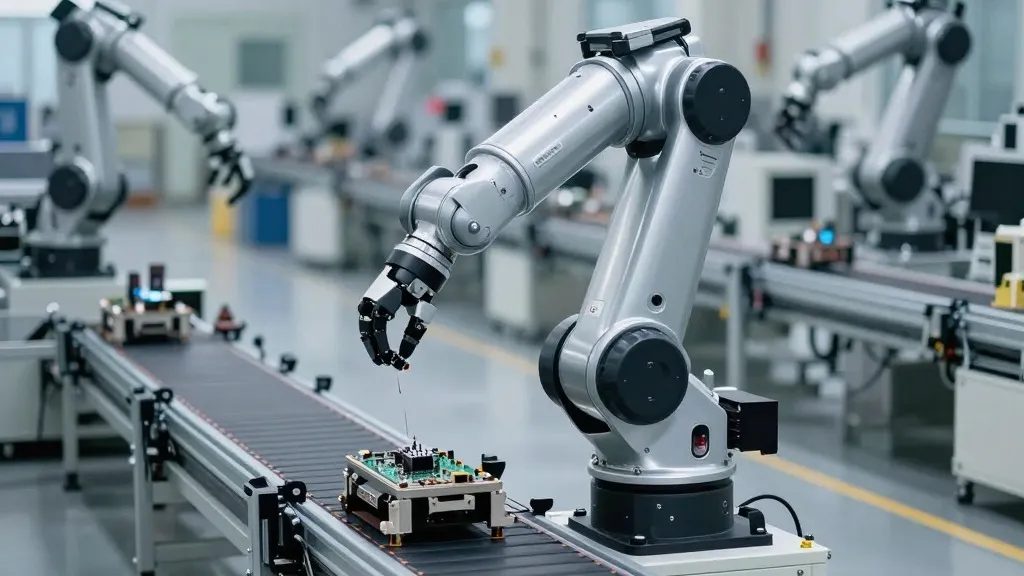
Musk identified the robot’s hand as the primary hardware challenge. A Tesla Optimus engineer noted that the hand and custom gears remain difficult to perfect. The fingers must be soft enough to handle delicate objects yet durable enough to withstand constant industrial wear, a balance that is difficult to achieve since robots cannot heal like human skin. In addition to hardware, the company is still refining its AI architecture. Because Tesla lacks a large fleet of robots collecting real-world data, it plans to build 10,000 to 20,000 units for an "Optimus Academy" to practice tasks. The AI5 chip is scheduled for integration into the Optimus around April 2027.
The current timeline follows a history of shifting targets. In 2024, Musk suggested internal use in 2025 and high-volume external sales in 2026. By January 2025, he projected the construction of 10,000 robots that year, with several thousand performing useful work by year’s end. That prediction proved inaccurate, as the company later admitted none were fully operational. Tesla’s recent shareholder letter described the robots currently coming off the Fremont line as the first "production-quality" units, implying that earlier iterations did not meet this standard.
Competitors in the humanoid robot space are also facing similar technical hurdles, though some are progressing on parallel timelines. XPeng, a Chinese automaker, activated an automated production line for its IRON robot in September. The company aims for mass production by the end of 2026 and deliveries in early 2027, starting with retail environments. Meanwhile, Boston Dynamics has begun producing its electric Atlas robot, with all 2026 deployments already committed, including a partnership with Google DeepMind. Hyundai, which owns Boston Dynamics, plans to deploy 25,000 robots across its plants in the coming years.
Despite these efforts by rivals, Musk stated on the earnings call that, to his knowledge, no other company is close to Tesla in developing a general-purpose humanoid. This claim contrasts with the fact that Boston Dynamics has hired Milan Kovac, Tesla’s former head of Optimus, and is already testing Atlas in a car factory. While Tesla may have produced the most units, industry observers note that the core challenge for all manufacturers remains generalization: creating AI that can perform unscripted tasks in real-world environments without failing.
Tesla has promised to release a video within one to two months showing the Optimus performing tasks that are not pre-programmed. Musk argued that many existing demonstrations rely on scripted routines that would not hold up in actual industrial settings. For investors and consumers, the late-2027 target represents another significant step back from earlier promises, highlighting the technical difficulty of creating a robot that is both reliable enough to pay for itself and dexterous enough to handle diverse industrial jobs.