Tesla Deploys 20,000 Robots to Teach Their Own Successors
A new training program at the Fremont factory will use tens of thousands of units to generate the data needed for commercial humanoid delivery by 2027.
By Ricardo Whitaker ·
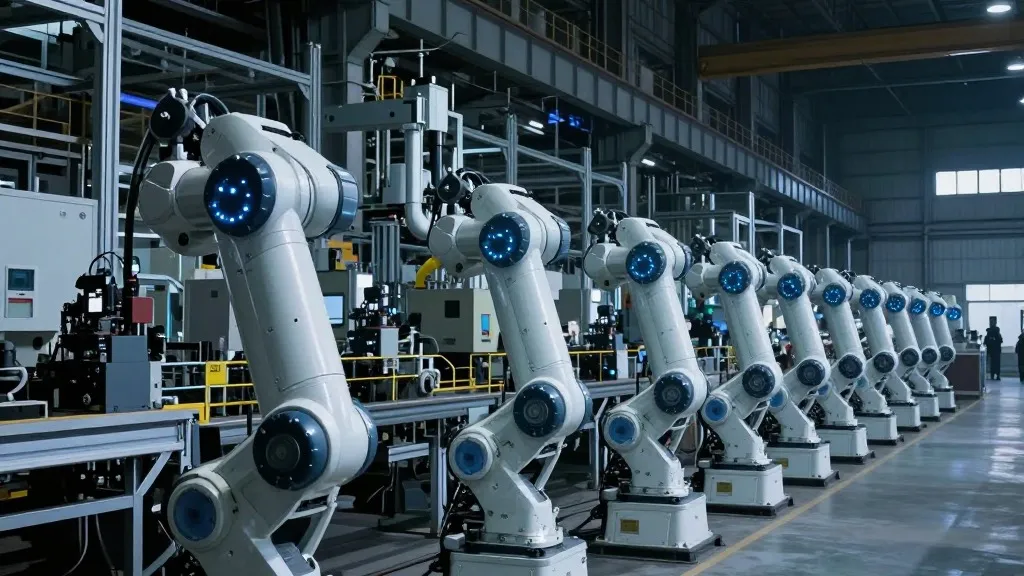
Ten thousand to twenty thousand robots will soon serve as the primary instructors for their own kind. This is the core of a new strategy Tesla unveiled to solve the data gap that has hindered the development of its Optimus humanoid. The company has begun producing these machines on a high volume line inside its Fremont factory, marking the first time the units meet the standard for a genuine consumer product rather than a prototype.
The transition to this new manufacturing phase began earlier this year when the company cleared the space that previously built the Model S and Model X. Engineers removed the old vehicle assembly line in just 46 days. That rapid clearance allowed Tesla to install equipment sized for a massive output target of one million units per year. Most of this heavy machinery is already in place, and the company expects output to climb steadily toward 20,000 robots per week as the line ramps up.
The path to full commercialization follows a predictable trajectory. Elon Musk described the growth curve as shallow at first but steepening over time. The engineering team is currently focused on refining the AI, electromechanical design, and reliability of the machines. They aim to complete this work by the end of next year. Once those upgrades are finished, Tesla plans to begin delivering Optimus units to outside companies for tasks that are dangerous, repetitive, or require around the clock operation.
The training method represents a significant departure from Tesla's automotive strategy. The company relies on data from millions of cars on the road to improve its driving algorithms. Optimus lacks such a vast fleet of active units. To bridge this gap, Tesla established what it calls the Optimus Academy. Here, a large pool of robots will practice a wide range of tasks. Every unit coming off the Fremont line will feed its performance data into the next version of the model, creating a continuous cycle of improvement.
Hardware upgrades are also scheduled for the coming year. Tesla intends to integrate its AI5 chip into the Optimus platform. A new video is expected within one or two months that will show the robot completing tasks driven by AI rather than preprogrammed motions. Musk criticized rival humanoid demonstrations that rely on scripted routines, arguing that such methods will not hold up in the real world.
The supply chain is preparing for the increased demand. In September, Tesla certified Tuopu, Joyson, and Sanhua as mass production partners for key components. A much larger facility dedicated to Optimus is also under construction at Giga Texas. Recent drone footage shows the steel frame of that plant nearing completion. The long term target for the Texas site is significantly higher, aiming for 10 million robots per year.
Costs are trending in a favorable direction as well. Executives noted that production expenses are moving toward the expected manufacturing cost of the Cybercab. This suggests the robot is being engineered for volume from the start. The hands remain the most difficult component of the design. This was a point Musk emphasized at a recent event, and it is where much of the current engineering effort is focused.