Tesla Bets on Self-Built Maps to Patch FSD Glitches
The company is constructing its own navigation data to resolve issues with speed limits, parking, and route selection.
By Gabriel Serrano ·
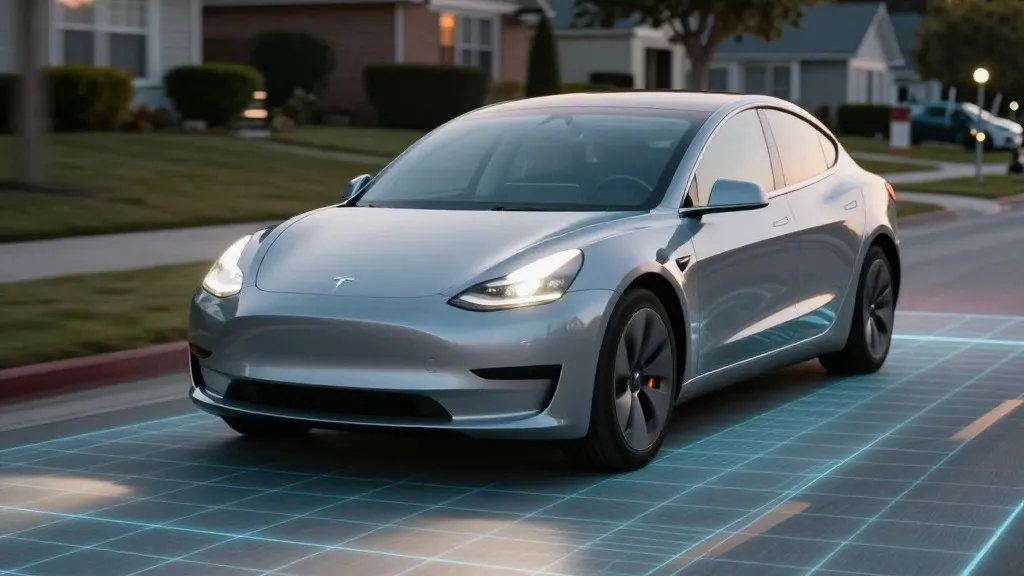
Tesla is shifting gears on how its vehicles understand the road, announcing that it will construct its own maps to address specific failures within its Full Self-Driving software. For drivers, this change targets persistent frustrations regarding speed limit recognition, parking maneuvers, and route selection. The company intends to build a navigation system powered by artificial intelligence that learns from the collective data gathered by its fleet, while also adapting to individual driver preferences and voice commands.
The announcement came during the Q3 2026 earnings call. A shareholder inquired why the system continues to struggle with basic navigation tasks, noting that mapping continues to be a problem for FSD. Tesla's VP of AI, Ashok Elluswamy, responded that the company shouldn't be depending on external people's maps. He stated that Tesla is creating a new architecture to handle the start and end of trips with the upcoming FSD v15 update, with further capabilities for navigation and parking planned for the following months.
This pivot represents a significant change in strategy for the automaker. In 2019, during the Autonomy Day presentation, Elon Musk characterized high-precision maps as a huge mistake and a really bad idea that makes a self-driving system extremely brittle. For years, the company's messaging suggested that relying on detailed mapping data was a crutch that other companies, specifically Waymo, needed because they used lidar sensors. Tesla previously argued that its vision-based approach would allow cars to drive anywhere without needing detailed road data.
While Tesla is now building a map layer to assist its vision system, executives maintain this is distinct from the high-precision maps previously criticized. However, the specific issues Tesla aims to fix, such as understanding speed limits and parking zones, relate directly to environmental awareness. Recent data highlights this struggle. A Belgian road safety group found that FSD sped in 55% of the 30 km/h zones it tested in Brussels last month, and in the US, the NHTSA is considering an investigation into claims that Tesla vehicles are speeding through active school zones.
The company's history with this technology has been inconsistent. In 2015, Tesla stated it was building high-precision maps with a high level of granularity using data from customer cars. By 2019, the stance had reversed, with Musk calling such maps a mistake. Now, seven years later, the company is returning to the idea of utilizing data from its fleet to create a map that helps vehicles drive better.
This approach moves Tesla closer to the methodology used by Waymo, which maps cities by driving sensor-equipped vehicles through them before launching service. Tesla is describing a similar process where its cars collect data to feed a map. The primary difference remains the hardware; Waymo's vehicles use lidar sensors, while Tesla relies on cameras. Additionally, Tesla's Robotaxi service operates within geofenced areas, city by city, which aligns with the use of specific mapping data.
There is nothing inherently wrong with using maps, as every serious self-driving program utilizes them. A map built from millions of Tesla cars could offer a significant advantage if it resolves issues with speed limit signs and other road information. However, this development contradicts previous statements claiming that vision alone would be sufficient to solve the problem of driving. The company is now creating a map layer, operating within geofences, to assist the driverless system.