Warhound Unveils $1.2 Billion Plan to Engineer High-Tech War Dogs for U.S. Defense
A new venture backed by $200 million aims to clone genetically enhanced canines equipped with Anduril gear to replace the declining supply of imported military working dogs.
By Gabriel Serrano ·
The figure that anchors the latest announcement from the defense tech world is $200 million. That is the amount in fresh capital raised by Warhound, a startup emerging from stealth mode on Thursday to tackle a critical gap in U.S. military infrastructure. The round values the company at $1.2 billion and brings a consortium of heavy hitters to the table, including Sequoia, 8VC, Corner Ventures, and In-Q-Tel. The latter is a venture firm backed by the CIA and other U.S. intelligence agencies, signaling the serious strategic interest behind the project.
The core mission of Warhound is to genetically engineer working dogs for the U.S. military, law enforcement, and emergency response teams. These canines are designed to handle tasks that are too dangerous for humans or too complex for existing machines. Specific roles include bomb detection, search operations, and other specialized duties. The company argues that the current supply chain is fragile. More than 80 percent of the U.S. military's working dogs are imported from Europe. Furthermore, less than half of these imported dogs are deemed fit for service, creating a growing reliance on foreign nations for a domestic security asset.
The driving force behind the venture is a collaboration between Ben Lamm of Colossal Biosciences and Palmer Luckey of Anduril. Lamm first met Luckey at a conference about a year ago. Luckey expressed a desire to do more for the military's working dogs. This conversation led to extensive research into the breeding of working dogs. Lamm discovered that many dogs fail training due to inherited issues. These problems include poor eyesight, high risks of cancer, hip dysplasia, and muscle atrophy.
Lamm believes that genetic engineering can solve these issues. The goal is to enhance health, longevity, speed, agility, and olfactory sensors for tasks like bomb sniffing. The team studied top-performing breeds, specifically the Belgian Malinois and German Shepherd. They extracted cell lines from these breeds and placed them in a biobank. The plan is to edit these genes to create a new type of dog. This involves adding genes that improve performance and removing those that cause defects. Colossal will provide the technology through licensing, while owning equity in the new venture. Luckey is a partner in the venture but does not hold equity.
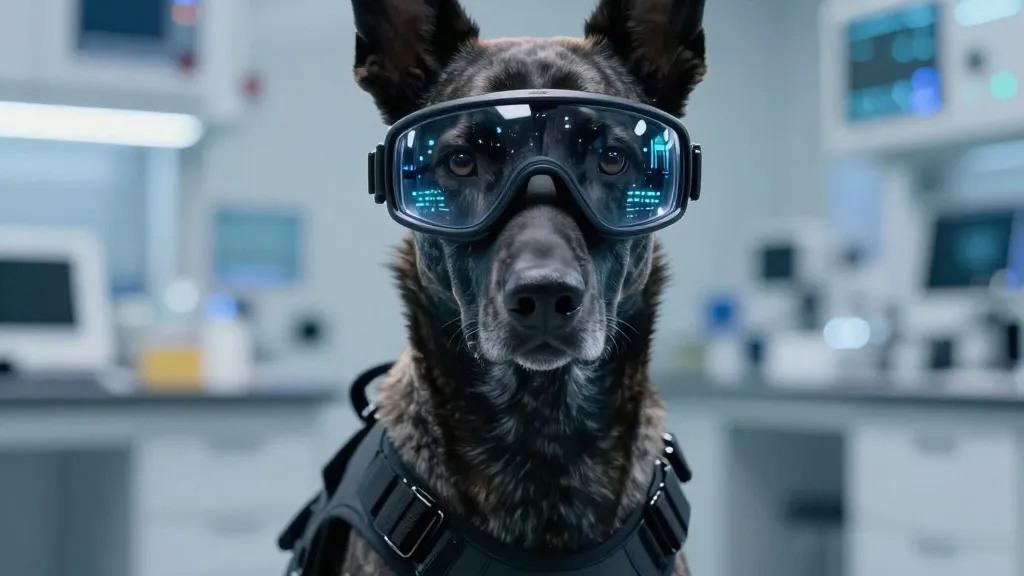
Anduril will provide the hardware and software components. This includes protection vests and goggles designed to aid situational awareness and coordination. Lamm described bulletproof vests with data sensors. These sensors will send information back to handlers, allowing them to better understand the battlefield environment. The enhancements are intended to be non-invasive. Lamm noted that these additions will work on top of the dog, not inside it. The belief is that making the dog safer and healthier will improve its performance in the line of duty. This should also better protect the human handlers.
The first batch of these engineered dogs is set to be cloned and incubated soon. Births are expected in early 2027. Service is ideally targeted to begin within two years. Viagen, another company owned by Colossal, will partner with Warhound on the cloning process. Lamm stated that Viagen's technology has a high cloning success rate. Colossal already uses this technology in its program to protect endangered species. The company is known for its de-extinction efforts, such as bringing back animals like the dodo and the mammoth. It has been using AI to help with gene cloning and identifying animal genes.
Warhound has not yet determined the price it will charge for the dogs. It expects to sell to first responders, the Department of Defense, military service groups, and police forces. Lamm said the company has briefed many government groups about the business. Regarding civilian safety, he stated that each dog will be trained like any standard military working dog. The dogs will be managed by the entity that purchases them. This approach aims to ensure that the enhanced traits do not complicate the integration of these animals into existing protocols.
The company is working under the guidance of the American Humane Society. This collaboration helps certify Warhound's training program for the new dogs. There is also a hope that when these military dogs retire, they will enter the Society's Military Working Dog Reunification Program. This program provides homes for retired military dogs. The American Humane Society issued a statement applauding the invitation. It described itself as the country's first national humane organization, grounded in science and ethics. The group looks forward to working with Warhound and Colossal to ensure the animals are treated humanely.
The emergence of Warhound marks a significant shift in how the U.S. approaches military canine acquisition. By combining genetic engineering with advanced tech gear, the company aims to secure the domestic supply of working dogs. The $200 million raise provides the resources needed to move from concept to reality. As the first batch of dogs is prepared for cloning, all eyes will be on the transition from lab to field. The success of this venture could redefine the role of the working dog in American defense.
For now, the details remain in the early stages. The dogs do not exist yet, but the infrastructure is in place. Investors from the tech and intelligence sectors have placed significant bets on this hybrid approach. The next two years will be critical as the company moves from incubation to active service. The Midwest and other regions may soon see these new canines in action. The goal is clear: to make the working dog safer, healthier, and more effective than ever before.