Automated Driving: Federal Regulators Propose Cyan Light Standard
The NHTSA has released a draft rule requiring driverless vehicles to display a specific blue-green marker lamp to indicate that no human is operating the car.
By Ricardo Whitaker ·
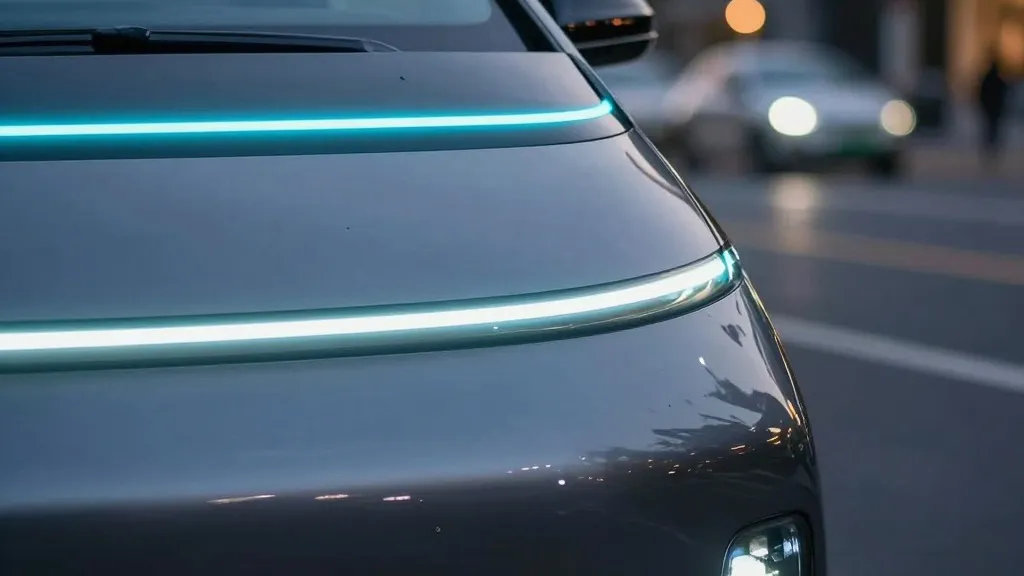
The National Highway Traffic Safety Administration has officially proposed a visual standard for autonomous vehicles, suggesting that driverless cars display a distinct cyan-colored light to indicate that an automated system is in control. This move marks a definitive federal stance after years of industry debate over how robotaxis should communicate their status to pedestrians, police officers, and other motorists.
The agency released proposed amendments to Federal Motor Vehicle Safety Standard 108, which governs lighting equipment for motor vehicles. The new rules aim to modernize the framework for autonomous driving by standardizing how these vehicles signal their operational state. The primary goal is to ensure that when a robotaxi is operating without a human driver, the signal is clear, consistent, and easily identifiable by all road users.
Regulators selected the color cyan, a specific shade of blue-green, to fill a gap in the existing visual language of the road. Currently, the automotive industry reserves red for braking, amber for turn signals, white for headlights, and flashing blue or red for emergency vehicles. By introducing cyan, NHTSA believes it can create a unique identifier that does not conflict with established meanings, thereby reducing confusion in mixed traffic environments.
There is historical precedent for this type of signaling. Mercedes-Benz previously received state-level approval to use turquoise lights on its Level 3 Drive Pilot vehicles. Although the automaker later shifted its strategy toward a Level 2++ system, the initial approval demonstrated that a distinct color could be effective. NHTSA now seeks to establish a uniform national standard that operators like Waymo, Nuro, and Zoox, as well as manufacturers like GM and Mercedes, can adopt across the country.
Under the proposed rule, the installation of cyan marker lamps would remain optional for manufacturers. However, the agency intends to define strict parameters for the color, brightness, and placement of these lights. This approach ensures that if a company chooses to include the feature, it does so within a consistent legal framework, preventing a fragmented landscape where different companies use different colors or configurations to signal autonomy.
The proposal also addresses internal vehicle controls that are often unnecessary for fully automated designs. Current regulations require physical hazard switches, manual beam shifters, and turn levers inside the cabin. NHTSA proposes removing these requirements to accommodate vehicles designed without traditional human inputs. The agency is also updating the 12.8-volt testing standard to allow for modern LED architectures, reducing administrative hurdles for manufacturers building for the autonomous era.
Additionally, the draft rule considers eliminating specific requirements regarding the vertical placement of high-beam and low-beam lights. By streamlining these technical specifications, the Department of Transportation aims to facilitate the broader deployment of autonomous vehicles. This administrative push supports the industry's goal of creating cars that may eventually lack steering wheels and pedals entirely, designs that are optimized for automated operation rather than human control.
Despite the push for streamlined rules, regulators continue to enforce existing standards strictly. Last month, NHTSA initiated an audit query regarding the Tesla Cybercab. The agency is examining the technical data and certification process Tesla used for the vehicle. The investigation focuses on the absence of certain design features, including sideview mirrors, pedals, and a steering wheel, which are currently mandated under existing safety standards. This oversight highlights the ongoing tension between modernizing regulations and enforcing current requirements during the transition to autonomous driving.