After GOP Loss, Trump's $5,000 Dividend Faces Bipartisan Scrutiny
Democrats now control both chambers of Congress, creating immediate legislative hurdles for the payment that Trump promised in Dallas if Republicans held power.
By Adrian Romano ·
The promise of a $5,000 check for every American adult, known as the Trump dividend, was a central campaign pledge for President Donald Trump leading up to the midterm elections. At the Republican Midterm Convention in Dallas, Trump told the crowd that if Republicans won both the House of Representatives and the United States Senate, voters would receive the payment. He framed the offer as a reward for the country's economic success, stating that the nation was making more money than ever before. The proposal was explicitly conditioned on the Republican Party maintaining control of Congress.
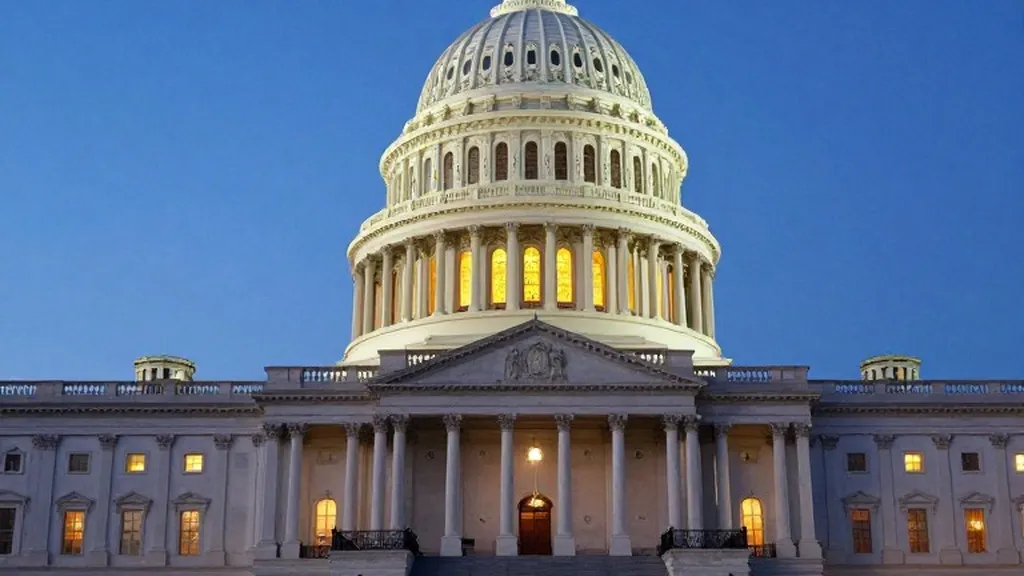
The election results have now shifted the political landscape in Washington. Democrats won majorities in both the U.S. House and Senate, picking up at least 43 House seats and seven Senate seats. As of the latest tallies, Democrats hold at least a 250-157 majority in the House and a 54-44 majority in the Senate. This outcome means the condition for the dividend, which required Republican control of both chambers, was not met. Despite the loss of the congressional majority, Trump has maintained that the payment is still a possibility, telling reporters before boarding Air Force One that the $5,000 is going to happen, 100%.
Speaker Mike Johnson, who led the House for Republicans during the 119th Congress, addressed the funding mechanism shortly after the promise was made. Johnson stated that congressional approval is needed for the payout. He said he would assume the president needs Congress to act and described the idea as creative. Johnson pledged that the Republican conference would work through the proposal and find consensus, despite having the smallest House majority in history during their tenure. However, with Democrats now holding the gavel and the majority in both chambers, the path for the legislation has changed significantly.
Democratic lawmakers are now positioned to oversee the administration and potentially block or modify the bill. The shift in power follows a wave of Democratic victories where they took full control of at least six state governments and gained control of the Texas House. In the federal chamber, the new Democratic majority is expected to scrutinize the cost and funding source of the dividend. The payment is estimated to cost more than $1 trillion, a figure that would add to the country's nearly $1.8 trillion annual budget deficit.
Fiscal experts have raised concerns about the sustainability of such a large expenditure. Erica York, a senior economist at the Tax Foundation, noted that the cost of the checks would spend almost all the revenue that new tariffs are projected to bring in over a decade. Trump cited tariff revenues as a potential funding source, but lawmakers did not include a separate tariff dividend in the One Big Beautiful Bill Act tax and spending bill that became law in 2025. The administration has not released a formal plan detailing how the money would be distributed or fully funded.
Senator Bernie Moreno of Ohio, a Republican, said he would introduce legislation to fund the proposal immediately after the election. However, political analysts point out that such legislation is unlikely to attain the required 60-vote supermajority in the Senate, especially now that Democrats hold 54 of the 100 seats. The new Democratic majority in the Senate, which includes gains in states such as Iowa, Kansas, Maine, North Carolina, Ohio, South Carolina, and Texas, provides a stronger check on executive spending proposals that may lack broad bipartisan support.
During the campaign, the promise drew mixed reactions even within the Republican Party. Some conservative leaders questioned the price tag and the precedent of a one-time cash payout. Texas Representative Chip Roy, for instance, wrote that dependency is evil and soul-sucking in all its forms. The potential payout also raised questions about whether the president was trying to buy votes, a strategy that has been used historically in campaigns. Election law experts have noted that while the promise is likely legal under the First Amendment, its implementation requires legislative action that the president cannot unilaterally force.
The economic context of the promise is complicated by current inflation and consumer sentiment. Polls indicate that the economy and affordability are top concerns for voters. About 8 in 10 respondents said inflation has caused a severe or moderate financial hardship for their households. While Trump argued that the strong economy makes the payment easy, consumer sentiment remains weak as gasoline prices rise due to the war in Iran and wages struggle to keep pace with rising costs. The new Democratic Congress is likely to focus on these cost-of-living issues as they begin their terms in January.
Democratic leaders have emphasized that their victory allows them to check the administration's spending priorities. Representative Richard Neal, who is expected to regain the chairmanship of the House Ways and Means Committee, said he is committed to reversing what he called unjustified tariffs and backroom deals on trade. This stance suggests a potential friction point with the administration's reliance on tariff revenue to fund initiatives like the dividend. The Democratic sweep of state legislatures in at least twelve additional chambers further solidifies the party's position to scrutinize federal policies at the state level.
The White House has defended the plan, with spokesperson Davis Ingle stating that President Trump has consistently proven his doubters wrong. He contrasted the administration's record with what he described as the Democrats' record of historic inflation and unfettered illegal immigration. However, the practical reality of passing a $1.2 trillion spending bill now rests with a Congress controlled by the party that did not meet the condition for the payment. The new leadership in both chambers will likely debate the merits of the dividend as they set their legislative agenda for the 119th Congress.