Wisconsin voters face a political setup similar to 1982
With a governor's race, legislative control, and constitutional amendments on the ballot, the 2026 election cycle mirrors the contests held 44 years ago.
By Adrian Romano ·
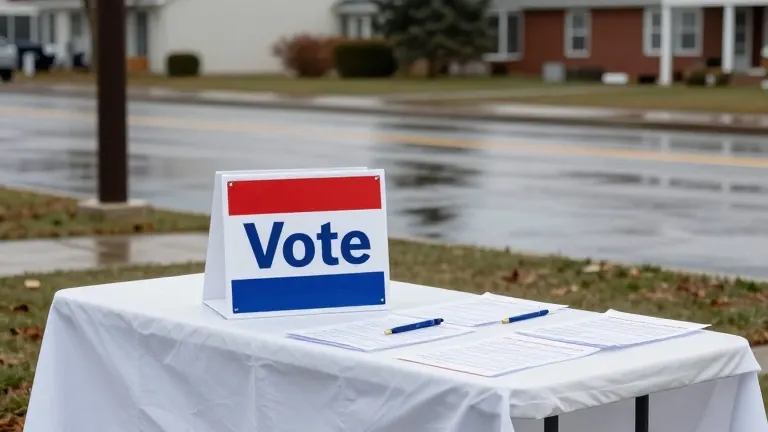
Wisconsin voters will decide three Republican-drafted constitutional amendments on November 3, 2026. This ballot measure structure parallels the 1982 election, when residents approved nine such changes.
The political calendar for this year shares specific structural elements with the cycle from four decades prior. Both years feature a contest for governor following the retirement of the incumbent. Voters in both cycles are also selecting an attorney general and determining partisan control of the state Legislature.
One major difference exists in the federal races. There is no U.S. Senate election in 2026. In November 1982, Democrat William Proxmire won his fifth and final term. He defeated Republican state senator Scott McCallum with 63 percent of the vote to McCallum's 34 percent. McCallum later served as lieutenant governor from 1987 to 2001. He became governor in 2001 when Republican Tommy Thompson resigned to join the Cabinet of President George H.W. Bush.
The current gubernatorial race pits Milwaukee County Executive David Crowley against U.S. Rep. Tom Tiffany. Crowley is the Democratic nominee. Tiffany, who has represented northwest Wisconsin in the U.S. House, is the Republican candidate. In 1982, Democrat Tony Earl ran against business executive Terry Kohler. Kohler's father and grandfather had previously served as governor. Kohler stated he was walking in the footsteps of his family after one-term Republican Gov. Lee S. Dreyfus announced in May 1982 that he would not run again.
The timing of incumbent announcements has shifted between the two cycles. In 1982, Gov. Dreyfus gave voters seven months of notice. In July 2025, Democratic Gov. Tony Evers announced his retirement, providing sixteen months of warning before this year's election.
Economic conditions differed sharply between the two eras. In 1982, the state faced a post-recession deficit. Democrat Tony Earl claimed Wisconsin was staring at a $1.5 billion deficit. He argued an unpopular tax increase would likely be necessary. Terry Kohler disputed those figures and pledged a no-tax-increase budget. Kohler noted that unemployment had soared to record post-World War II double-digit highs. He claimed government spending and restrictions on business contributed to the downturn. This year, state government reports a $3 billion budget surplus.
Tax policy history is also part of the context. On May 1, 1982, the state sales tax rose from 4 percent to 5 percent. The increase was intended to be temporary. It remains the current base rate, though local governments now add surtaxes and wheel taxes.
The 1982 gubernatorial result was a landslide. Tony Earl defeated Terry Kohler with 56 percent of the vote to 42 percent. Modern statewide elections are often decided by margins under 1 percent. In that 1982 race, Democratic Attorney General Bronson La Follette became the first statewide candidate to receive more than one million votes.
The current attorney general race features a rematch. Democratic Attorney General Josh Kaul is running for a second term. He faces Fond du Lac District Attorney Eric Toney. Toney lost to Kaul by a narrow margin four years ago.
Legislative control is the final major parallel. In 1982, Democrats maintained their 19-14 margin in the state Senate. They also kept their 59-40 lock on the Assembly. In 1982, voters re-elected all nine U.S. House members, consisting of five Democrats and four Republicans. Wisconsin lost one House seat after the 1990 Census. Republicans now hold six of the state's eight seats. On November 3, 2026, Democratic candidates aim to win at least two Senate seats to take control for the first time since 1990. Democrats also seek to gain enough Assembly seats to end 16 years in the minority in the 99-member chamber.