Ohio State ice core pioneer Lonnie Thompson dies at 78
The professor spent 55 years drilling ice from mountains to build climate records, earning 245 published papers and major national honors.
By Ricardo Whitaker ·
Lonnie Thompson published 245 peer-reviewed papers in a career that spanned more than five decades, a body of work that helped define the modern study of paleoclimatology.
Thompson died at age 78 following a brief illness, according to a Nov. 3 announcement from the Byrd Polar and Climate Research Center at Ohio State University.
He joined the university faculty in the 1970s after earning a master's degree in 1973 and a doctorate in 1976, both from Ohio State. Before that, he grew up on a farm in West Virginia, where he recorded daily weather observations from a station in his family's barn.
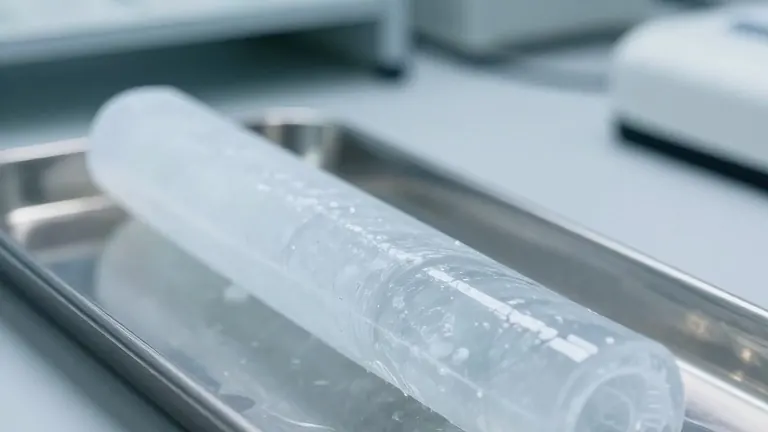
Thompson's research focused on ice cores, which are cylinders of ice drilled from glaciers. These cores contain trapped air bubbles that preserve atmospheric conditions from thousands of years ago. He and his wife, Ellen Mosley-Thompson, led expeditions to collect these samples from the Andes, the Himalayas, and Mount Kilimanjaro.
By analyzing these non-polar ice cores, Thompson provided evidence of warming temperatures and shrinking glaciers around the world. His work expanded the field by showing that climate history could be read from mountain glaciers, not just polar ice sheets.
His contributions earned him the National Medal of Science, the Tyler Prize for Environmental Achievement, and the Dan David Prize. He was also elected to the National Academy of Sciences and led 63 field programs while securing 76 research grants.
Ian Howat, director of the School of Earth Sciences at Ohio State, said Thompson was known for his humility and ability to communicate with diverse groups. Howat recalled that a relative met Thompson at a cookout and was surprised to learn he was a renowned scientist, noting that Thompson felt like an ordinary person from West Virginia.
Thompson's work was featured in the 2023 film "Canary." He and Mosley-Thompson built a research group that trained undergraduate, graduate, and postdoctoral students. Howat said Thompson was the public face of the Byrd Polar and Climate Research Center and an ambassador for climate science.
The university stated that Thompson's legacy includes the physical ice core records he collected, which new faculty members will continue to study. Howat said that while other scientists will add to the data, Thompson was the only person who gathered those specific samples from high-altitude glaciers.