Nepal Flood Recovery Cost Set at $5 Billion
With 100,000 displaced and malnutrition rates spiking in some districts, aid groups are racing to winterize shelters and deliver supplies to cut off communities.
By Adrian Romano ·
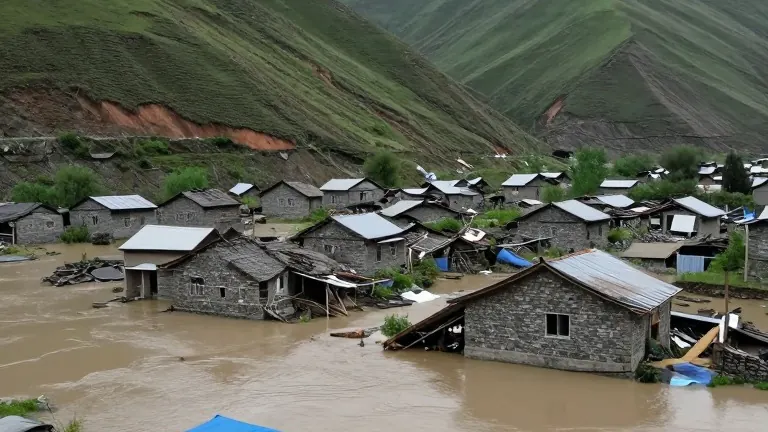
The glacial floods that swept through Nepal earlier this year have left a recovery bill estimated at 5 billion dollars. The disaster, driven by climate change, killed at least 1,500 people and left more than 5,000 missing. Approximately 100,000 residents remain displaced, with many still living in temporary tents as winter approaches.
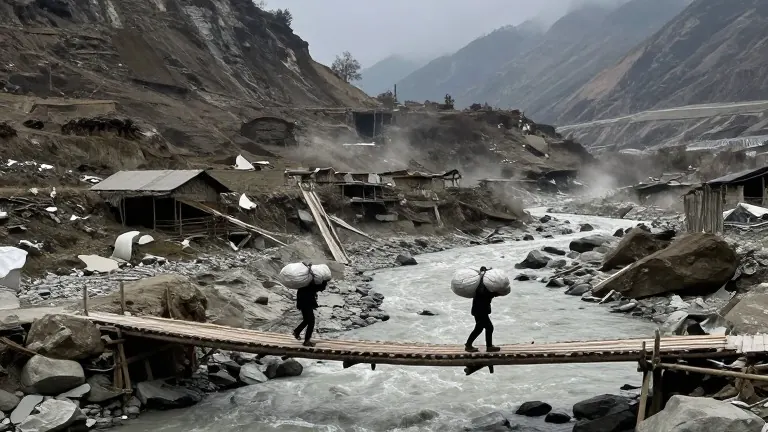
The physical damage to infrastructure is extensive. The United Nations reports that seven health facilities, 23 schools, 10,000 toilets, and 64 water systems were damaged or destroyed. More than 100 bridges along the flood path are gone, severing mountain roads that served as lifelines for high-altitude villages. In the district of Naukunda Gaunpalika, moderate acute malnutrition jumped from 0.8% in June to 8.7% in October. Pooja Pandey Rana, who directs Helen Keller International in Nepal, describes the increase as a big jump likely driven by the loss of local farms and gardens.
Januka Dhital, a former catering worker from Uttargaya, now works as a community health aide with Helen Keller International. She lost her home in the flood but reunited with her injured husband and daughter after hours of searching. She says the work is the only thing keeping her going. Her duties include screening children for malnutrition and supporting postpartum mothers. She notes that families now depend on packaged foods like instant noodles because they have lost their livelihoods and access to fresh produce.
Aid delivery faces logistical hurdles. Ayush Joshi of Save the Children points out that parts of the upper north remain cut off. Pushmaya Tamang, a community aid worker from Nuwakot, often crosses shaky makeshift bridges to reach families. She says the bridges shake underfoot, making them dangerous for the elderly and those crossing from both directions at once. Tamang’s own village is essentially gone, and she struggles to find words to comfort neighbors who have lost everything, including family members.
Shyam Pathak, a health chief at UNICEF, notes that the magnitude of devastation is unimaginable. He observes that many health workers are rebuilding their communities while dealing with their own trauma. He says this resilience has helped the response effort. UNICEF is teaming with other organizations to mobilize workers for mental health counseling.
Winter presents a new set of risks. Joshi warns that cold temperatures, overcrowding, and poor ventilation in tents increase health risks. Responders are winterizing shelters and providing medical care. Despite these efforts, the long-term plan for rebuilding homes and water systems remains unclear.
Funding for the recovery is far short of the estimated cost. The U.N. Climate Fund approved 20 million dollars for the project. Domestic and international donors have contributed over 100 million dollars. Pandey Rana says that while these funds help, they do not cover the full scope of the destruction.