Cartel leader's capture in Sinaloa triggers overnight gunfire and roadblocks
Mexican forces detained Fausto Isidro Meza Flores in Guasave, prompting a violent response that delayed his extraction until 4 a.m.
By Ricardo Whitaker ·
Mexican authorities captured Fausto Isidro Meza Flores, the head of the Beltrán Leyva criminal organization, in the northern state of Sinaloa late Friday. The detention of Meza Flores, known as El Chapo Isidro, triggered an immediate and violent reaction from cartel gunmen that lasted into the early hours of Saturday morning.
Meza Flores was listed on the FBI's top 10 most wanted fugitives list. U.S. officials wanted him for trafficking drugs into the United States and illegally possessing firearms. He also served as a key ally to Los Mayos, a faction of the Sinaloa Cartel designated as a foreign terrorist organization by the Trump administration in 2025.
Mexican security forces used stealth and surprise to locate the cartel boss. They established a perimeter around a building in Guasave where he was hiding. Suspected cartel operatives attacked the security cordon with guns and explosives. Armed forces personnel entered the residence and detained Meza Flores and his second-in-command. No casualties were reported during the initial capture.
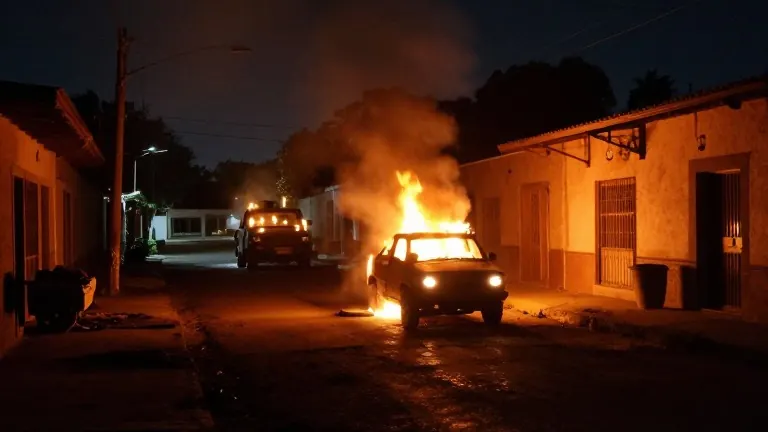
The extraction process faced severe resistance. A federal official, who spoke on condition of anonymity, said cartel members set up at least 10 roadblocks using burning vehicles on the streets of Guasave. This barricade prevented the army and National Guard special forces from removing Meza Flores from the city until 4 a.m. on Saturday. The official described the effort to move him as extraordinary given the intensity of the criminal group's response.
Residents of Guasave reported widespread terror during the night. Paola Sánchez, a local firefighter, said thousands of people sought shelter in grocery stores and other buildings to escape intense gunfire. She noted that many businesses, cars, and trucks were burned. The city's fire crews remained at their station until Saturday morning, waiting for orders to dispatch teams to check for ongoing fires.
Video footage shared by officials showed heavily armed men in camouflage escorting Meza Flores through a dimly lit house. He was placed in the back of a truck and flown to Mexico City to appear before prosecutors. The violence subsided by Saturday morning, bringing a sense of calm to the city.
Mexican President Claudia Sheinbaum and U.S. President Donald Trump both viewed the arrest as a security victory. The Trump administration has pressured the Mexican government to aggressively target criminal groups. Mexico's government stated that intelligence from Washington aided the operation, though it provided few specific details on the coordination between the two nations.
Security Secretary Omar García Harfuch announced that armed forces would remain deployed in Sinaloa to protect civilians. He called the detention an important step in pacifying the region. The Drug Enforcement Administration issued a statement praising the capture, noting it delivered a blow to a group that trafficked fentanyl and other deadly drugs into American communities.
David Saucedo, a Mexican security analyst, warned that the arrest highlights the risks of the kingpin strategy. This approach focuses on capturing top leaders without dismantling the entire organization. Saucedo noted that while the number one and number two figures were arrested, the network of hit men, street-level dealers, and political connections remains intact. He described the current violence as a product of pressure from the United States to remove high-profile leaders.
The capture follows the military killing of Nemesio Oseguera Cervantes, leader of the Jalisco New Generation Cartel, in February. Under Sheinbaum, homicides have dipped over the last two years as her administration targets cartel kingpins more aggressively than previous governments.