Midterm Results: A Blue Wave Hits Deep Red States
Democrats won Senate races in Texas, Kansas, and Ohio, defying decades of political norms and challenging the durability of the current Republican coalition.
By Gabriel Serrano ·
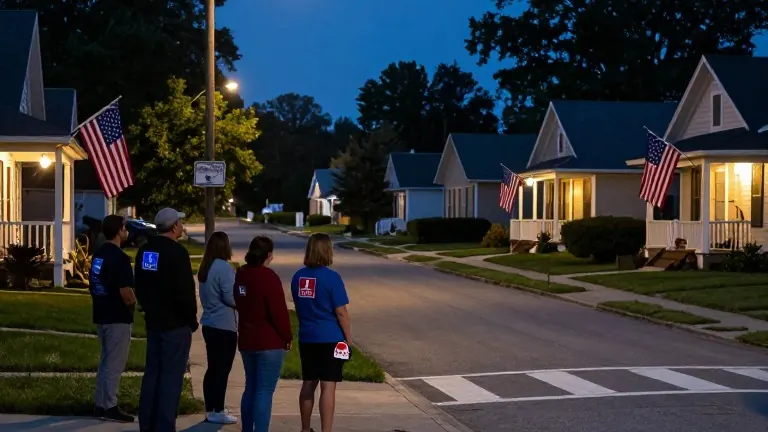
In southwestern Kansas, counties that backed Donald Trump by 35 points in the 2024 presidential election voted narrowly for the Democratic candidate in the U.S. Senate race on Tuesday. Finney, Seward, and Ford counties all shifted their allegiance, a move that signals a tangible destabilization of the political map that has held steady for a decade.
The results, which are still being tallied, show a rejection of the incumbent administration that extends well beyond traditional Democratic strongholds. Republicans lost their Senate race in Ohio and appear likely to lose in Michigan, regions that have historically served as the symbolic center of post-industrial conservative support. Texas, where Democrats have not won a statewide race in over 100 contests, joined South Carolina, Iowa, and Kansas in the list of states where the party in power failed to hold its seat.
Voters cited a variety of factors for their choices. In South Texas, the impact of immigration raids played a role. In Kansas, the Iran war’s effect on diesel and fertilizer prices influenced the outcome. In South Carolina, the selection of the Republican candidate was a deciding factor. These local grievances combined to override the cultural divides that had previously insulated conservative voters from national economic and policy shifts.
The campaign also elevated a new cohort of younger Democratic candidates. Jon Ossoff in Georgia, James Talarico in Texas, and Abdul El-Sayed in Michigan ran on platforms that criticized the status quo’s oligarchic and authoritarian tendencies. Their success has given the South, a region historically deep red, a purple hue as the party seeks to modernize its base.
Despite these gains, the Democratic Party faces internal challenges. The party remains generally unpopular, and a power struggle persists between its insurgent left wing and its legacy leadership. Figures such as Hakeem Jeffries and Chuck Schumer now hold key roles, yet the party struggles to present a unified face to voters who are waiting for a presidential primary contest.
Elon Musk spent nearly $200 million to keep Texas red, but the state still swung blue in the Senate race. The financial investment failed to secure the seat, suggesting that the monetary backing of major donors may no longer guarantee victory in states that have become politically competitive.
Around 11 p.m. on Tuesday, Fox News projected that Democrats would win control of the House of Representatives. Shortly after midnight, President Trump called into the network. He described the election as "just a point in time" and noted that there was "a mood in the air." The loss of the House, combined with the Senate defeats in key states, marks a sharp departure from the political consensus formed after the 2024 election.
In Minneapolis, residents placed "I voted" stickers on a lamppost at a memorial for Alex Pretti, a nurse killed by federal agents during a deportation campaign last winter. The gesture occurred as ballots were being counted, linking the local memory of federal overreach to the national results that indicated a widespread desire for change in governance.