Irish aid faces 17% cut proposal
A priest who served in Kenya for four decades urges the Government to protect funding during the EU presidency despite domestic cost pressures.
By Gabriel Serrano ·
A 17 per cent reduction in foreign aid funding is the central figure in current European negotiations, a target that has drawn sharp criticism from a veteran Irish aid worker. Father Gabriel Dolan, 71, spent 42 years in Kenya before returning to County Fermanagh in 2024. He has called on the Government to use its current EU Council presidency to defend development spending rather than accept the proposed cuts.
The debate comes as Ireland holds the rotating presidency of the Council of the European Union, a role it assumed on July 1 and will retain until December 31, 2026. A primary objective of this tenure is securing agreement on the 2028 to 2034 Multiannual Financial Framework. Several EU governments have pushed for the 17 per cent reduction, while Members of the European Parliament have countered by calling for aid increases.
Dolan, who was ordained in 1982 and originally from Garrison, Co Fermanagh, argued that domestic economic strain should not dictate overseas policy. He acknowledged that many voters question why money is sent abroad when local living costs are high. However, he suggested that a deeper understanding of conditions in developing nations would increase public support. "It’s not that keeping this money would solve everyone’s problems anyway," he said. "Because people have these concerns it shouldn’t be an excuse for politicians to cut funding."
His organization, Haki Yetu, meaning "Our Rights," operates along the Kenyan coast and is primarily funded by Irish Aid through the missionary organization Misean Cara. Dolan noted that many human rights groups need to raise their voices against the trend of funding reductions, which he linked to earlier cuts by the United States Agency for International Development.
Climate change represents a major concern for Dolan, particularly because the poorest populations suffer the most. He explained that communities in at-risk regions are governed by seasonal planting and rainy cycles. When crops fail due to climate shifts, the most vulnerable people bear the brunt of the impact. He warned that these same groups are also the most susceptible to financial sanctions and funding cuts.
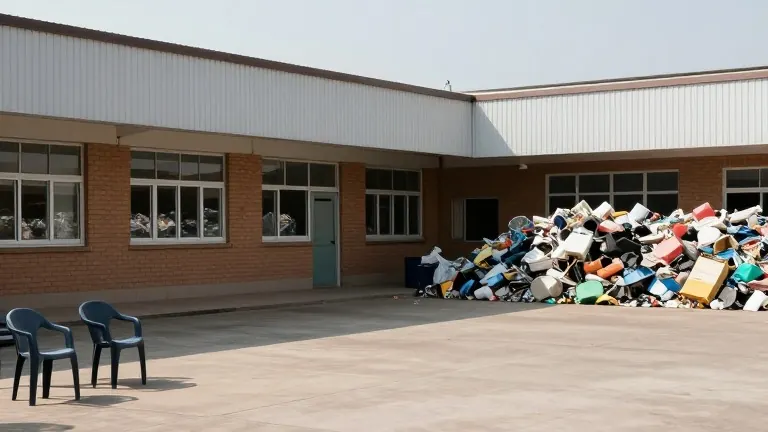
The importance of sustained, on-the-ground presence was illustrated by a specific legal victory in Mombasa. In 2012, a school built by the church beside the city’s largest rubbish dump was bulldozed during an illegal eviction. The community resisted, leading to a 13-year legal battle that concluded in 2025. The court allowed the school to be rebuilt, and it now serves nearly 400 children as a high school. Dolan described the process as slow, noting that the justice system is often designed to exhaust victims into leaving. "It’s not always about quick fixes," he said.
Haki Yetu also addresses sexual and gender-based violence, securing up to 10 successful prosecutions for survivors annually. The charity often covers practical costs such as transport and meals for individuals attending court. Dolan emphasized that missionary work remains vital because it places staff within the community. "Having people on the ground, who become part of these communities" is essential for identifying needs.
Having grown up during the Troubles, Dolan said helping people assert their rights in difficult situations was "almost in my DNA." He currently lives in Fermanagh and has handed over his work to a team in Kenya that includes Muslim colleagues. He reported that these staff members are present in the community and understand local needs. "You might say I lived the dream," Dolan added, citing his time in Kenya as a privilege with happy memories.