Honda Marysville plant marked 44 years since first U.S. made Japanese car rolled off line
The assembly line at the Ohio facility produced the nation's first domestically built Japanese vehicle on November 1, 1982.
By Ricardo Whitaker ·
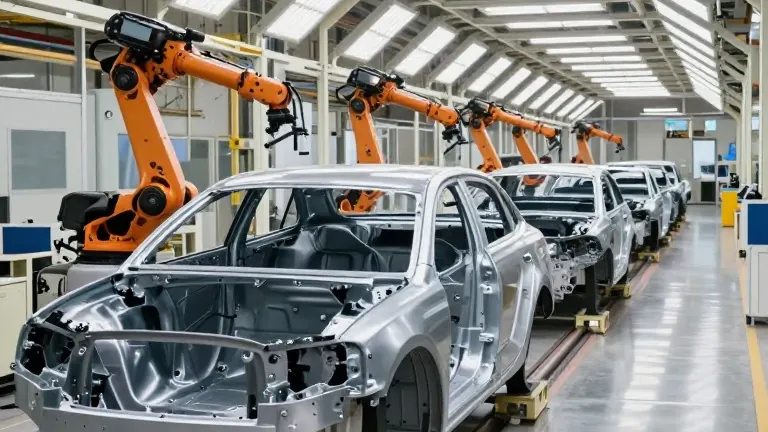
A Honda vehicle left the assembly line in Marysville, Ohio, on November 1, 1982. The car was the first Japanese automobile manufactured in the United States. This event marks 44 years ago this week. The facility is a Honda manufacturing plant. It is located in the state of Ohio. The production milestone ended a period of imported vehicles from Japan. It began an era of local assembly for the brand.
The choice of Marysville was part of a strategy to build cars closer to American consumers. Honda established the plant to meet U.S. market demand. The first model to roll off the line was a domestic production unit. This distinction separated it from vehicles imported from overseas. The car represented a shift in the global auto industry. It allowed for quicker delivery to American dealerships.
Since that 1982 debut, the Marysville plant has continued operations. It remains a key part of Honda’s North American manufacturing network. The site has produced multiple vehicle models over the decades. The original 1982 car is a historical artifact. It symbolizes the entry of Japanese automakers into U.S. soil. The factory has been a source of employment for local workers. It has influenced the regional economy for more than four decades.
The November 1, 1982, date is often cited in automotive history. It is a specific marker for the localization of production. Before this date, Japanese cars in the U.S. were imported. The Marysville plant changed that dynamic. It allowed for domestic manufacturing. The first car to leave the line was a standard production model. It was not a prototype. It was ready for sale to consumers.
Honda has maintained its presence in Ohio since the initial announcement. The plant has undergone several expansions. It now produces a wider range of vehicles. The 1982 milestone is remembered by former employees. It is also noted in industry histories. The event is a concrete fact in the timeline of American manufacturing. It stands alongside other major industrial shifts. The date remains fixed in the company’s corporate history.
Today, the anniversary coincides with other historical events. On November 1, 1512, Pope Julius II inaugurated the Sistine Chapel ceiling. In 1755, a magnitude 8.5 earthquake struck Lisbon, Portugal. The 1765 Stamp Act went into effect, prompting resistance in the colonies. President John Adams moved into the White House in 1800. Abraham Lincoln appointed George B. McClellan General-in-Chief in 1861. Nicholas II became Emperor of Russia in 1894. Benito Mussolini described the Rome-Berlin alliance in 1936. Seabiscuit defeated War Admiral in 1938. Puerto Rican nationalists attempted to assassinate President Truman in 1950. The U.S. tested a thermonuclear hydrogen bomb in 1952. East Germany reopened its border with Czechoslovakia in 1989. The Maastricht Treaty took effect in 1993. Peace talks for Bosnia opened in 1995.
The Honda plant continues to operate. The 1982 date is a specific historical benchmark. It is not a future prediction. It is a recorded event. The car that left the line is part of the company’s legacy. The factory is still active. The anniversary is a factual observation. It does not imply a trend. It marks a specific moment in time.
More Business · Watch Your Wallet · Report a business · Got a Story?