Wolves Roam into Finnish Villages After Google Clears 1,300 Acres for AI
The displacement of local wildlife by unauthorized construction has led to increased human-animal interactions in communities near the new data center sites.
By Ricardo Whitaker ·
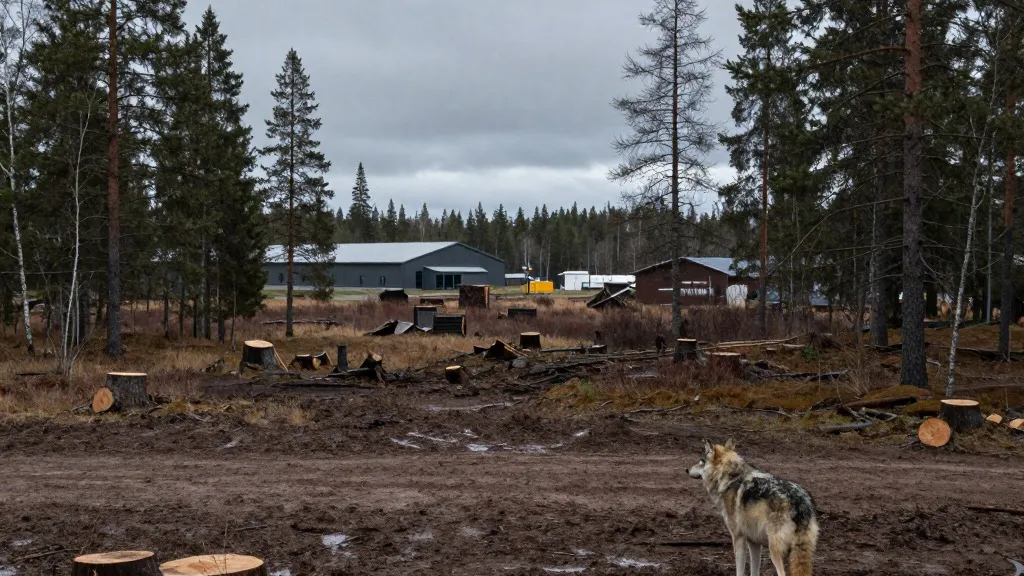
The rapid expansion of artificial intelligence infrastructure in Finland has triggered a significant ecological shift, leading to unexpected consequences for nearby rural communities. Residents in the region are now reporting that wolf packs have moved into villages, a direct result of the large-scale clearing of forested land designated for new data centers.
The situation centers on two primary sites in northern Finland where Google has been developing facilities to support its AI operations. In the area near the village of Otanmäki, roughly 55 miles southeast of Muhos, the company has cleared approximately 500 acres of forest. Additionally, another 816 acres of woodland near Muhos have been transformed into an expanse of mud. These two areas combined account for the 1,300 acres of forest that have been significantly altered or removed.
Local authorities have responded to the construction with a mix of regulatory orders and public scrutiny. The Finnish Licensing and Supervision Authority, known as LVV, issued an order for Google to cease work in both locations. This directive came after the company was found to have proceeded with clearing activities without fully adhering to established environmental regulations. The halt in construction is intended to allow for a review of the project's impact on the local ecosystem.
The immediate environmental impact has been severe. What was once a dense forest habitat is now described as a muddy wasteland. This change has forced local wildlife to seek new territory. Anni Ranta, a 53-year-old resident of Otanmäki whose family has lived in the area for generations, explained that wolves have started coming into the village because the wild animals were moved out of their natural forest homes. This shift poses a serious safety concern for the local population.
Ranta also expressed broader concerns about the presence of U.S.-owned infrastructure in the region. She fears that the data centers will make Finland a more attractive target for Russian aggression, adding a geopolitical layer to the environmental dispute. Her comments reflect a growing sentiment among locals that the benefits of the project may be outweighed by its costs to the community and the landscape.
Beyond the presence of wolves, residents have reported other negative side effects of the construction. These include persistent noise from factory and construction work, streams turning brown due to runoff, and the displacement of rare bird species. The Finnish Association for Nature Conservation, represented by SLL, described Google's handling of environmental policy as unprecedented and clear in its deviation from standard practices. The organization has highlighted the scale of the damage as a key issue in its critique of the project.
Google has responded to the criticism with a statement emphasizing cooperation. A spokesperson for the company said it would fully comply with the requests from the LVV. The spokesperson added that the company looks forward to maintaining an active and open dialogue with all authorities to strengthen its partnership with Finland and local organizations. This optimistic tone suggests that Google is banking on the long-term business benefits of the data centers to sway regulators and the government.
This is not the first time that AI data center developers have faced pushback over environmental effects. Similar concerns have been voiced across the United States and in other countries where large-scale server farms are being built. The pattern of complaints regarding noise, water quality, and habitat loss appears consistent, indicating a systemic issue in how these facilities are integrated into existing landscapes.
The dispute serves as a case study in the tension between technological advancement and environmental stewardship. As the race to build AI capacity accelerates, the physical footprint of these projects is becoming increasingly visible. For the residents of Otanmäki and Muhos, the abstract concept of data processing has become a tangible reality in the form of mud, noise, and the return of wolves to their doorsteps.
The next steps for the project will likely depend on the outcome of the ongoing dialogue between Google and Finnish authorities. Whether the construction resumes or the project is restructured, the impact on the local wildlife and the community's trust in the developer will remain central to the discussion. The 1,300 acres of cleared land now stand as a stark reminder of the physical cost of digital innovation.