Washington resident dies from H5N1 after dairy exposure
Yakima County confirms the first U.S. bird flu death in a year, citing three dairy-linked cases and 33 positive cattle herds.
By Ricardo Whitaker ·
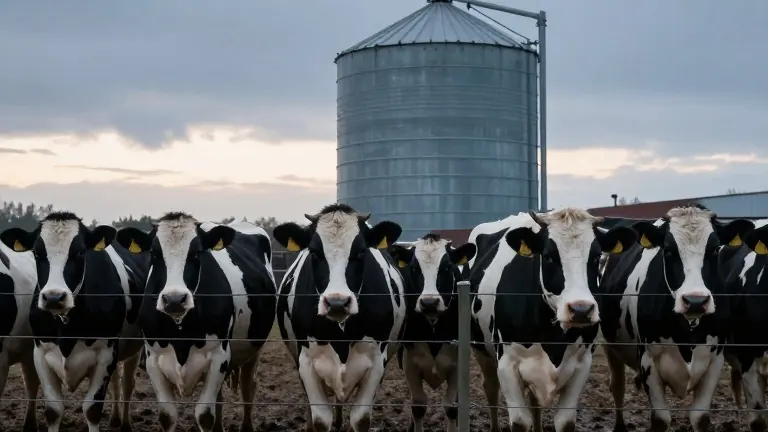
A resident of Yakima County, Washington, died from complications of avian influenza on Sunday. The death marks the first U.S. fatality linked to bird flu in the past year. The individual had preexisting health conditions and was hospitalized after contracting the virus.
County health officials identified the virus as the H5N1 strain. The patient was exposed at a dairy operation where cattle tested positive for the infection. Yakima officials have confirmed that 33 local dairy herds recently tested positive for H5N1. They also reported three human infections tied to exposure at dairies.
The Yakima Health District is currently working with the state health department to identify close contacts of the three infected individuals. Health workers are monitoring these people for symptoms to prevent further spread. The CDC stated that the patient was infected with H5N1, the same strain that caused a death in Louisiana in January 2025. A separate Washington state resident died in November 2025 from the rarer H5N5 strain.
H5N1 has circulated among wild birds, poultry, and livestock for several years. Public health concerns intensified in early 2024 when the virus spread to U.S. cows. The CDC reports that more than 70 human infections have occurred in the United States since the beginning of 2024. The agency noted that there is no known person-to-person transmission. They maintain that the risk to the general public remains low.
A CDC spokesperson announced on Monday that genetic sequencing of the virus from the deceased Washington patient showed no changes. The analysis found no mutations that would make the virus spread more easily or cause more severe illness. This result aligns with previous CDC assessments of the H5N1 strain circulating in the U.S.
Officials continue to advise individuals who handle sick or dead birds to take specific precautions. Recommendations include wearing respiratory protection, eye protection, and gloves when handling poultry. Farm workers face a higher risk of exposure due to frequent contact with animals. Health agencies urge these individuals to follow safety protocols to reduce the chance of infection.