Qatar plans five-year push to build defense autonomy by 2031
The strategy aims to reduce reliance on US forces by securing air defenses, critical infrastructure, and maritime routes.
By Adrian Romano ·
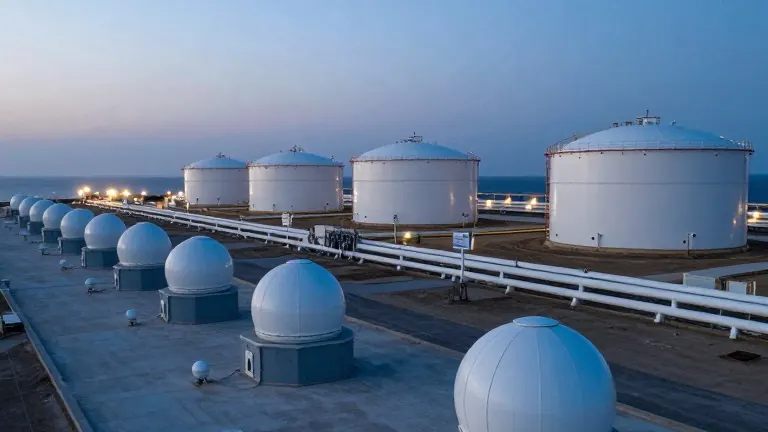
Qatar intends to construct an independent national defense capability over the next five years. The goal is to secure the state and its vital interests even if the United States provides only limited assistance. This plan prioritizes defense autonomy, ensuring the country remains open to alliances without depending on the decisions of a single external power for its safety.
The initiative follows a period of regional instability that raised questions about the security of Gulf Cooperation Council states. Qatar currently relies heavily on the United States for protection during major crises. Collective capabilities within the GCC do not provide sufficient assurance that member states would be willing to take risks to defend one another. The new strategy addresses this gap by focusing on the capacity to prevent threats, withstand attacks, and maintain continuity.
The plan rests on six pillars: air and missile defense, early warning capabilities, protection of critical infrastructure, air and naval power, cybersecurity, and a restructuring of security policy. The objective is not to build an army capable of confronting a major regional power alone. Instead, the strategy targets a degree of autonomy appropriate for a small state. Qatar must be able to detect threats, absorb initial strikes, protect leadership, and maintain essential services without waiting for external forces.
Building an integrated air defense shield is the top priority. The current fleet of advanced fighter aircraft is insufficient for military autonomy. By 2031, Qatar aims for a system that functions independently of US forces. This includes a multilayered radar network, a unified command center, and integrated short, medium, and long-range defenses. The system will also feature expanded counter-drone capabilities, stronger electronic warfare equipment, and large national stockpiles of ammunition and spare parts.
The air force must sustain operations for several consecutive weeks if external supply lines are disrupted. To achieve this, policymakers will focus on increasing ammunition stockpiles and expanding domestic defense manufacturing. The plan includes training more Qatari personnel for maintenance roles and dispersing ammunition stockpiles to reduce vulnerability. Qatar will also increase its stock of drones and develop ground and aerial refueling capabilities to strengthen logistical support.
Protecting the maritime domain is an economic necessity for the peninsula. Qatar’s exports of liquefied natural gas and oil depend on the security of surrounding waters. The strategy does not aim to build a large fleet. Instead, it seeks to make attacks on maritime infrastructure difficult and costly. Priorities include improving maritime surveillance, developing capabilities to counter maritime drones, and enhancing the protection of ports and shipping routes.
A national resilience program will protect critical infrastructure such as gas facilities, water desalination plants, power stations, and telecommunications centers. The program requires every sector to have adequate backup capacity. If a major desalination plant stops operating, an alternative source must be available to prevent a water shortage from escalating into a national crisis. This same principle applies to energy, communications, and government institutions.
Qatar must also develop independent intelligence capabilities to know what is happening in the region before relying on foreign reports. The plan calls for space-based reconnaissance, unmanned aerial vehicles, radar systems, and artificial intelligence-driven data analysis. The country will integrate commercial and military satellites with national capabilities. Qatar will continue to use intelligence from the US, France, and the UK, but it must possess the independent capacity to assess threats and prepare for them early.
Finally, the strategy diversifies security guarantees to reduce dependence on a single external power. GCC states could benefit from partnerships with South Korea, Turkey, European powers, Pakistan, and China in specific fields. This approach does not mean building an alliance against the US. It aims to reduce the risks associated with relying on a single supplier or ally. By 2031, Qatar will have the integrated air defense, intelligence, and infrastructure protection needed to maintain state functions during a crisis.