Michigan funeral workforce: Wayne State University trains 110 students to fill 1,889 director roles
The state’s only university mortuary science program is scaling up production to combat a labor shortage driven by retirements among veteran practitioners.
By Adrian Romano ·
Michigan currently employs 1,889 licensed funeral directors across 666 funeral homes, a workforce that is shrinking as experienced professionals exit the industry. To address this gap, Wayne State University is expanding its mortuary science program, which remains the only university in the state to offer a degree in the field. The program has grown its enrollment to approximately 110 students, a figure that contrasts sharply with the roughly 40 students enrolled a decade ago.
Wayne State began offering this specific degree in 1939, establishing a long-standing pipeline of talent for Michigan’s funeral service industry. Mark Evely, the chair of the Department of Applied Health Sciences and director of the program, noted that the state faces a labor shortage. He explained that the need for qualified directors will become more pronounced over the next decade as the Baby Boom generation ages and mortality rates rise.
The Michigan Department of Licensing and Regulatory Affairs tracks the current workforce numbers. While funeral directors do not appear on the Michigan Center for Data and Analytics 2026 Hot 50 Job Outlook list, Evely stated that funeral homes continue to struggle with recruiting and replacing retirees. The university aims to bridge this gap by producing between 40 and 50 graduates each year.
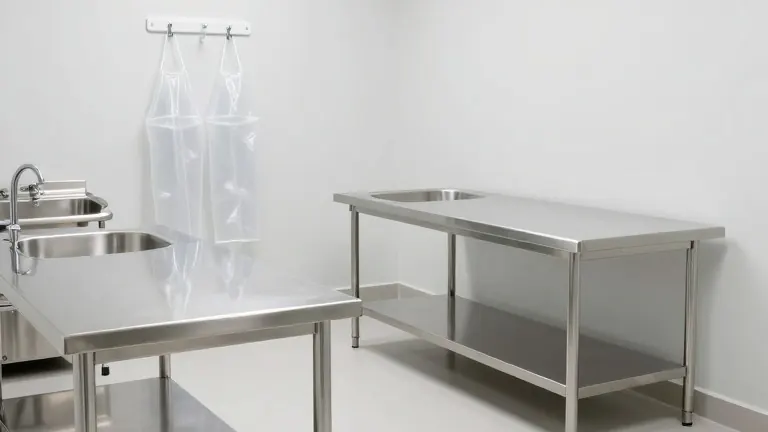
Students in the program pursue a bachelor’s in mortuary science, a credential that meets the educational requirement for licensure in Michigan and every other state. The curriculum includes classroom instruction, hands-on laboratories, and practical experience at licensed funeral homes. These placements allow students to apply theoretical knowledge in professional settings under supervision.
Caroline Orban, a second-year part-time student, is one of those trainees. A graduate of Hamilton High School in west Michigan, Orban works part-time at Harry J. Will Funeral Homes in Livonia. She emphasized the necessity of practical application in mastering skills like embalming. Orban noted that reading textbooks and reviewing slides is insufficient without the physical act of performing the work.
The program offers flexible learning options, including full-time and part-time schedules as well as in-person and online formats. This structure supports students who are already working in the profession or who live outside the Detroit metro area. Most graduates enter careers as funeral directors, though some also find positions in medical examiner offices, organ procurement organizations, and embalming chemical manufacturing.
Evely, who graduated from the program in 2004, continues to work as a funeral director in metro Detroit. He estimates that approximately 80 percent of Wayne State graduates remain in Michigan. He stated that starting salaries for funeral directors at smaller firms typically range from $55,000 to $60,000 annually, with larger firms offering higher compensation.
The university maintains an advisory board of funeral service practitioners to provide feedback on the curriculum. Evely observed that it is rare to find a Michigan funeral home that does not employ at least one Wayne State graduate. He asserted that all graduates who seek funeral service employment in the state are securing jobs. Orban, who initially considered the career after job shadowing in Allegan, Michigan, said she feels more confident now than at the start of the year.