Clocks fall back one hour this Sunday
Standard time begins Oct. 25, a shift health experts say better aligns with human circadian rhythms, though a 2025 poll shows only 12% of adults support the twice-yearly switch.
By Gabriel Serrano ·
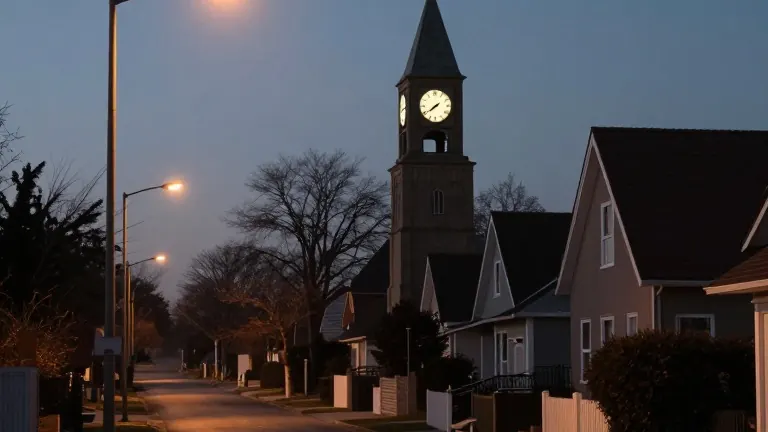
The United States will move its clocks back one hour at 2 a.m. local time on Sunday, Oct. 25.
Most Americans will gain an extra hour of sleep, but the change brings darker afternoons. Standard time will remain in effect until March 14, when daylight saving time resumes. The shift marks the end of the summer clock and the start of the winter schedule.
Public opinion on the biannual time change remains largely negative. An AP-NORC poll conducted last year found that only 12 percent of American adults supported the practice, while nearly half opposed it. Despite this sentiment, lawmakers in Washington took up the issue again over the summer. The latest legislative attempt is the Sunshine Protection Act, which the U.S. House of Representatives passed overwhelmingly in July. The bill would make daylight saving time permanent. President Donald Trump supports the measure and has pressured reluctant senators to vote in favor, including posting the phone number of Arkansas Sen. Tom Cotton, an opponent, on social media.
Health organizations, including the American Medical Association and the American Academy of Sleep Medicine, have long recommended adopting standard time year-round. These groups argue that standard time aligns better with human biology and the sun. The circadian rhythm, a roughly 24-hour internal clock, depends on exposure to light. Mornings with bright natural light and evenings with less light help keep this rhythm on track. This alignment makes it easier for people to wake up and maintain healthy sleep patterns. The clock also influences heart rate, blood pressure, stress hormones, and metabolism.
An hour shift can disrupt sleep schedules because work and school start times do not change. The spring change, which removes an hour of sleep, is often harder for people to tolerate. The fall change adds an hour but reduces evening daylight, which can limit time for exercise or outdoor activities after work or school. For some individuals, particularly those with seasonal affective disorder, the shorter days and reduced sunlight associated with fall and winter can worsen symptoms of depression. Shift workers and those already sleep-deprived may find the adjustment more difficult.
Sleep quality in the United States is already a concern. About one in three U.S. adults sleeps less than the recommended seven hours per night. More than half of U.S. teens do not get the recommended eight hours on weeknights. Chronic sleep deprivation is linked to heart disease, cognitive decline, and obesity. To prepare for the change, experts suggest shifting bedtimes by as little as 15 minutes per night in the days leading up to the switch. Getting morning sunlight is critical for resetting the body clock. If outdoor exposure is not possible, sitting near a window can help.
Most countries do not observe daylight saving time. Among those that do, the change dates vary, with most transitions occurring in North America and Europe. In the United States, Hawaii and most of Arizona do not change their clocks and remain on standard time. The nation attempted to make daylight saving time permanent in the 1970s, but the measure lasted less than a year before public outcry led to its reversal.