Xi Jinping's party purges 33 senior members as internal discipline tightens
The fifth plenum confirmed the removal of high-ranking officials, including two military leaders, while elevating a key anti-corruption enforcer to the Politburo.
By Gabriel Serrano ·
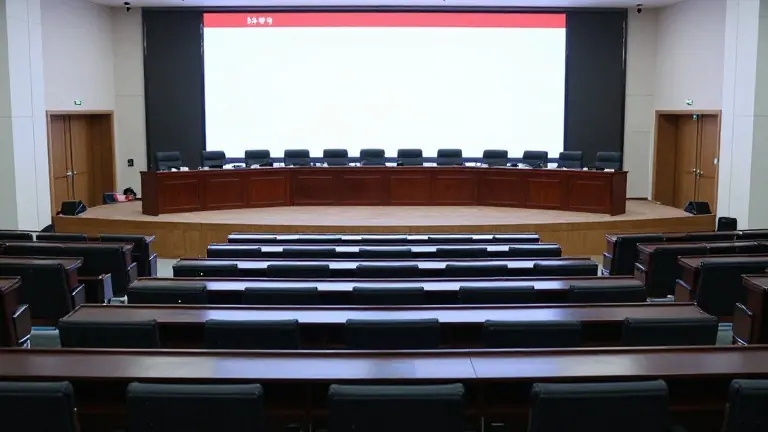
The Communist Party of China confirmed the expulsion of 33 senior members on Thursday, marking the end of its fifth plenum and a continuation of President Xi Jinping's ongoing anti-corruption drive. The decision followed a four-day meeting that concluded on October 29, during which the central committee reviewed its internal structure and discipline protocols. Only 279 of the 376 full and alternate central committee members attended the session. Analysts believe the absence of more than a quarter of the committee signals that many remaining officials are currently under investigation.
The removals include two high-profile figures from the military and diplomatic sectors. Zhang Youxia, formerly the nation's most senior military general, and Liu Jianchao, a diplomat previously considered a candidate for foreign minister, were both among those expelled. Neil Thomas, a senior fellow at the Asia Society Policy Institute, noted that the military leadership has undergone extensive turnover in the last few years. This purge reinforces the party's focus on eliminating corruption within the armed forces, a priority that has defined Xi's tenure since he took power in late 2012.
While many senior officials were removed, General Zhang Shengmin received a promotion. A key architect of the anti-corruption campaign, Zhang was elevated to the Politburo, the group of more than 20 top party officials. Joseph Torigian, a professor of Chinese studies at American University in Washington D.C., stated that this move signals Xi's intent to unify the party ahead of the next congress. Torigian suggested that the leadership is ensuring all members align with the current strategic direction before a potential fourth term for Xi is formalized next year.
The plenum emphasized the need for stricter party governance and discipline. Officials discussed methods to maintain the party's ideological purity across generations, aiming to prevent the degradation seen in other communist regimes. Zhang Fuhai, Deputy Secretary of the Central Commission for Discipline Inspection, told reporters on Friday that the party has punished 7.9 million individuals since 2012. This total includes over 960 senior officials. He described the fight against corruption as a complex and formidable task that requires continued effort.
The meeting also addressed bureaucratic inefficiencies, with leaders criticizing excessive formalities that do not produce results. To improve oversight, the party plans to implement more regular reporting from discipline inspectors to central authorities. This increased scrutiny aims to monitor local officials more closely. However, Thomas warned that local leaders might become overly cautious to avoid investigation. Such caution could lead to inertia and reduced experimentation, potentially counteracting the reforms Xi intends to introduce.
The plenum did not provide clear details on Xi's potential successor. Political watchers expect the next party congress to focus on consolidating power rather than naming a definitive heir. The full decisions and policy deliverables from the meeting are expected to be published in the days following the conclusion of the session.