Trump administration scraps methane rules, citing $45 billion savings for energy sector
The move eliminates requirements to repair major leaks and imposes lighter standards on small wells, a shift that environmental groups argue allows continued waste of a potent greenhouse gas.
By Ricardo Whitaker ·
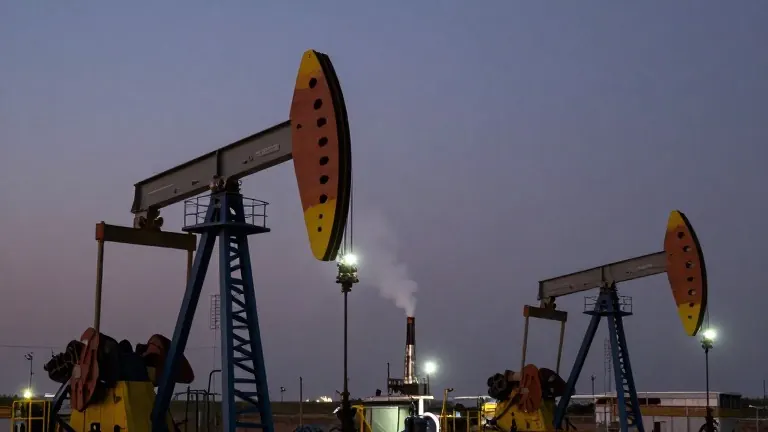
President Donald Trump announced on Tuesday that his administration is ending the Biden-era regulations designed to limit methane emissions from oil and gas drilling.
Speaking at a campaign rally in Lubbock, Texas, Trump claimed the decision would save companies and consumers $45 billion. He stated that the change would also unlock 210 million barrels of oil, a volume equivalent to approximately 10 days of U.S. petroleum consumption.
The administration argues that the previous rules placed a heavy burden on small operators. Trump described the prior regulations as "crushing" for these businesses and labeled the rules expensive and unnecessary.
EPA Administrator Lee Zeldin provided details on the specific changes earlier this month. The agency will eliminate its Super Emitter Program, which required firms to investigate and repair major methane releases. The EPA will also implement less restrictive standards for small oil and gas wells.
Zeldin has previously stated that the rule would have cost the industry $18 billion and hindered energy production. Under the new approach, the agency rejects the previous calculation of the social costs of greenhouse gas emissions on public health and the environment.
Scientists estimate that methane is responsible for roughly one-third of global greenhouse gas emissions. It is far more potent than carbon dioxide in the short term. The gas often leaks from equipment or is burned off as a waste product by drillers.
Environmental Defense Fund President Fred Krupp criticized the rollback, calling it a free pass for companies. He noted that the gas could be captured to provide energy to millions of households, arguing that the EPA should be fighting the waste rather than making it easier.
The Biden rule was published in 2024 and applied to both new and existing wells. It required operators to plug leaks from smaller wells that produce 6% of the nation's oil and gas but account for up to half of industry methane emissions. The rule was projected to prevent 58 million tons of methane emissions by 2038.
A related methane fee, approved in the 2022 climate law, was set to charge producers up to $1,500 per metric ton of excess emissions. Congress repealed that fee shortly after Trump took office in 2025.
Prior efforts to regulate methane dates back to the Obama administration, though those rules were scaled back during Trump's first term. The current administration's move fits a pattern of dismantling climate policies enacted under President Joe Biden, including lower vehicle fuel economy standards and reduced power plant emission restrictions.