Paraguay’s Senate Moves to Impeach President After Ueno Bank Collapse
Digital bank failure froze 3 million accounts and triggered criminal probes into $146 million in insider loans linked to the president's former company.
By Adrian Romano ·
Paraguay’s President Santiago Pena faces a formal bid for removal from office as the Senate convened a special session on Friday. The move follows the collapse of Ueno Bank, a major digital lender, which has triggered the country’s deepest political crisis in more than a decade. Pena announced his resignation on Thursday but requested a 72-hour extension to prepare his defense. He cited a lack of time to review an accusatory writ and its 300 pages of attachments, stating that the short notice was not due process.
Ueno Bank served approximately 3 million customers, representing roughly 60 percent of Paraguay’s adult population. The institution managed $800 million in public funds, including about $380 million invested by the state pension and health fund. On Monday, the central bank placed the bank into resolution after its solvency ratio dropped to less than half the legal requirement. This action froze customer accounts, preventing millions of depositors, retirees, and workers from accessing savings or unpaid wages.
Regulators identified a pattern of risky lending to insiders as the primary cause of the failure. Ueno loaned $146 million to companies tied to its owner, Grupo Vazquez. Investigators found that these loans exceeded legal limits and lacked sufficient collateral. Pena held a stake in Grupo Vazquez until March 2025. He also appointed Carlos Carvallo, former head of Ueno’s predecessor, to lead the central bank. Carvallo has since resigned.
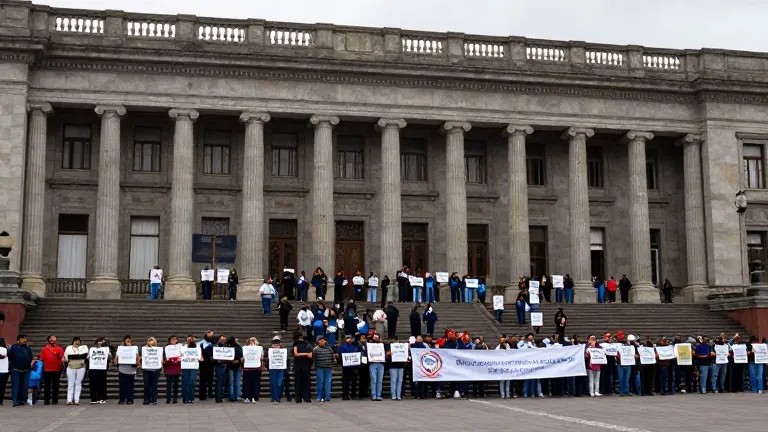
Protesters gathered outside Congress on Wednesday to demand accountability. Luis Pineda, one of the demonstrators, claimed that Pena and the Colorado Party had stolen their savings. He referenced the right-wing party’s nearly seven decades of rule in the country. Critics argue that public pension money was placed in the bank despite warnings about its high-risk lending practices.
Congress passed a law on Wednesday to create a state-guaranteed fund for repaying depositors. Repayments began on Thursday for small accounts holding up to $1,600. The fund covers up to $36,000 per customer, an amount the central bank estimates will cover the full balances of 97 percent of account holders. Opposition politicians prefer impeachment to resignation to prevent Pena from retaining eligibility for a lifetime senate seat.
The Public Prosecutor’s office ordered multiple criminal investigations on Thursday. A judge detained six Ueno executives, including founder Miguel Vazquez and bank president Juan Manuel Gustale, pending trial. Two additional executives were placed under house arrest. Prosecutors charged 27 bank officials and associates with breach of trust and attempted fraud. Attorney General Emiliano Rolon Fernandez announced three separate criminal probes into the crisis.
Paraguay has experienced banking crises before, including a prolonged period from the mid-1990s to the early 2000s. In 1995, the central bank closed Bancopar and three other banks due to liquidity problems and insider lending. The government covered customer deposits at those failed institutions, which damaged public confidence in the national banking system.