IRGC Moves Missile Production Underground to Survive Bombardment
Iranian officials confirm the transfer of weapons manufacturing to subterranean sites, claiming the shift preserves stockpiles during active conflict.
By Ricardo Whitaker ·
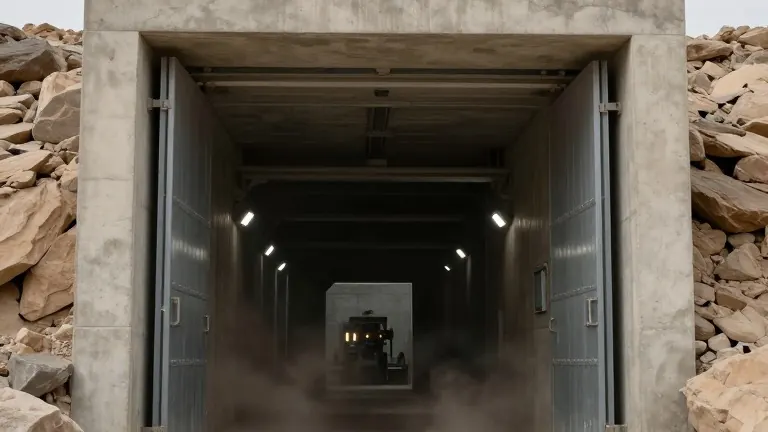
The Islamic Revolutionary Guards Corps stated on Saturday that it has moved its primary missile and drone production lines into extensive underground complexes. Spokesperson Hossein Mohebbi announced the infrastructure shift during a news conference in Tehran, describing the new facilities as a defense mechanism against heavy aerial bombardment.
Mohebbi explained that the relocation allows Iran to continue manufacturing weapons while adversaries believe stockpiles are shrinking. According to reports from the semi-official Tasnim news agency, the transfer from surface facilities to subterranean sites was completed rapidly. The spokesperson indicated that an underground missile city is scheduled for public unveiling in the near future.
The announcement includes claims of technological progress in stealth capabilities. Mohebbi asserted that these improvements have allowed Iranian drones and missiles to penetrate existing air defense systems. He cited recent engagements with the United States and Israel, stating that Iranian forces struck targets with high accuracy. The IRGC Aerospace Force maintains that all weapons are produced with homegrown expertise rather than through the reverse-engineering of captured enemy equipment.
Recent external analyses provide context for the IRGC’s operational claims. The Wall Street Journal reported that Iran caused billions of dollars in damage to US bases across the Middle East during recent conflicts. Separately, Reuters reported that Iran targeted Gulf infrastructure on at least 135 occasions during the same period, resulting in substantial financial losses for regional assets.
Mohebbi warned that restrictions on the range of Iranian missiles have been lifted. This declaration follows a statement by Supreme Leader Mojtaba Khamenei, who said there would be no geographical limits to Iran’s response if the country faces another attack from the United States and Israel. The current hostilities began on February 28 with a US-Israeli offensive against Iran, which led Tehran to close the Strait of Hormuz.
The closure of the strait triggered a global energy crisis that continues to affect international markets. On Friday, President Donald Trump stated that the US military had launched limited strikes on Iran’s Qeshm Island. He claimed that Washington had made progress in its talks with Tehran. US Central Command announced on Saturday the establishment of a new task force to prevent Iran from using land routes to transport advanced weapons.
Washington has also maintained a naval blockade to stop Iran from exporting oil. Tehran has warned that it will target Gulf energy infrastructure if fighting resumes, a move that would likely raise energy prices further. Additional US sanctions have strained the Iranian economy, compelling the country to adopt new trade routes.