Gold found where Raleigh failed to locate it in South America
A new book by novelist and archeologist David Gibbins details the 16th century explorer's expeditions and his eventual execution for treason.
By Ricardo Whitaker ·
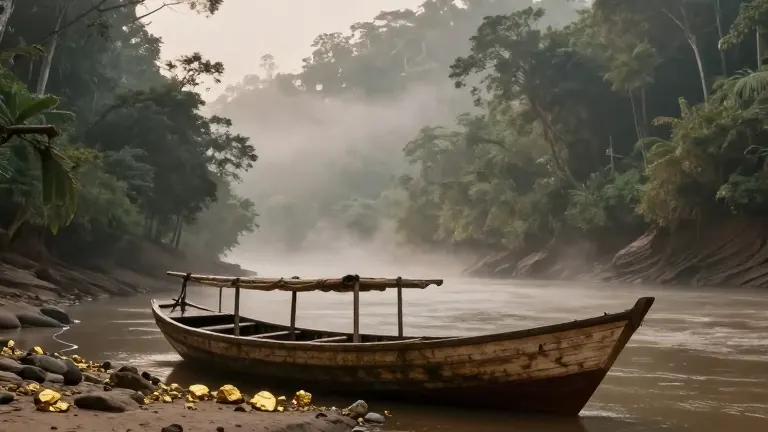
Gold has since been discovered in the South American regions that Sir Walter Raleigh explored without success.
The finding validates the geographic focus of Raleigh’s 16th century expeditions, which targeted the northeast corner of South America, an area that corresponds roughly to modern Guyana. Raleigh sought a mythical city of gold, a belief shared by several Spanish contemporaries. His motivation combined financial necessity with a desire to prove the existence of this fabled settlement.
David Gibbins, a novelist and archeologist, documents these voyages in The Quest for El Dorado. His account emphasizes the logistical and political dangers Raleigh faced. The explorer had to navigate hostile Spanish claims to the region while operating with sailing ships in an era before modern navigation. Gibbins notes that Raleigh maintained strict discipline among his crew to ensure fair treatment of Indigenous peoples.
Raleigh’s code required his men to avoid theft and rape. He instructed them to treat native inhabitants with all courtesy. This approach distinguished his expeditions from other transatlantic missions of the period. The profit motive drove the funding, yet Raleigh packed idealism into his baggage. One shipmate, the poet John Donne, wrote critical verses regarding the human cost of war and empire during these trips.
Raleigh never located the gold during his lifetime. He faced political intrigue that led to his imprisonment in the Tower of London. He was held with the aristocratic alchemist Henry Percy, also known as the Wizard Earl. The two men were housed comfortably and had access to their extensive personal libraries. Raleigh was eventually released and granted a second chance to sail to South America.
Upon his return to England, authorities arrested Raleigh again on charges of treason that were later deemed bogus. He lost his head to the executioner in 1618. His scholarly adventurer persona and action-oriented nature defined his legacy. The subsequent discovery of gold in the specific areas he mapped confirms that his geographic intuition was correct, even if his timing was not.