Engagement Ring Sales Expand Across All Four Seasons
Online retailers report year-round demand as couples bypass traditional holiday timelines to propose.
By Gabriel Serrano ·
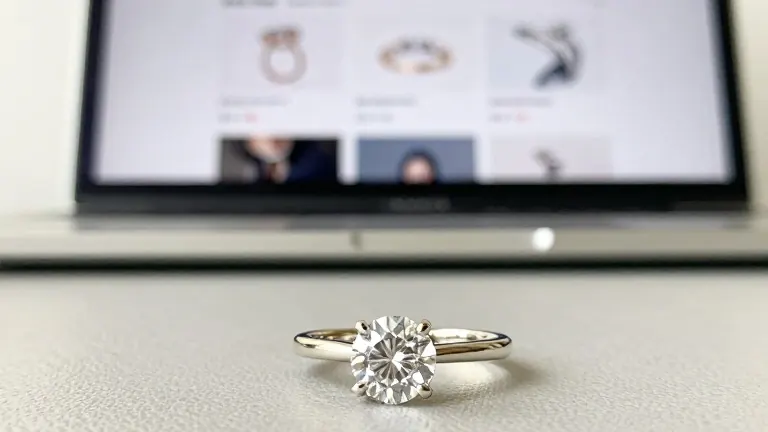
Wedding season no longer peaks in June. Engagements and marriages now occur evenly across the calendar, with couples proposing during holidays, spring, and deep winter months. This shift has driven a surge in online engagement ring sales, as shoppers seek convenience and a wider variety of options outside traditional brick-and-mortar windows.
The timeline of this market change reflects a broader cultural break from tradition. Travis Kelce proposed to Taylor Swift in the middle of summer, while Tom Holland and Zendaya announced their engagement during peak winter. These high-profile events signal that the optimal time to propose is now defined by personal readiness rather than seasonal conventions. Retailers have responded by keeping inventory and marketing consistent year-round, eliminating the previous need for consumers to wait for specific holidays.
Online purchasing has become the primary channel for these transactions. Shoppers now use digital tools to determine ring size and style without visiting a physical store. Kylie Bee, the Merchandise Lead of Fine Jewelry at Quince, advises buyers to use inexpensive sizer tools or print charts for accurate measurements. For those seeking discretion, Bee recommends borrowing a ring the partner already wears and measuring the internal diameter. This method requires selecting a ring style that can be resized up or down by at least a half size.
Retailers are competing on customization, ethical sourcing, and specific design aesthetics. Blue Nile offers the widest selection of diamond cuts and metal options, including platinum and 14k gold, with a lifetime warranty. In contrast, Quince uses a factory-direct model to offer lab-grown diamond rings priced between $900 and $5,000. Plum Diamonds, a women-owned business, focuses exclusively on lab-grown stones to reduce environmental impact and costs, crafting rings in 15 to 17 business days.
Sustainability is a key differentiator for several brands. Vrai uses zero-emission river energy in its American foundry to crystallize greenhouse gases into lab-grown diamonds. Each carat produced helps remove heat-reflecting gas from the atmosphere. Catbird creates rings in its Brooklyn studio using 100 percent recycled 14k gold or platinum, offering two-day delivery and 10-day returns. Angara provides made-to-order gemstone rings ranging from a few hundred dollars to over $100,000.
Next, shoppers are urged to review return policies and warranties before finalizing an order. Bee emphasizes that understanding these terms is essential for a high-investment purchase. Retailers like Quince allow returns or exchanges within 60 days and provide limited lifetime warranties. Mejuri offers free engraving, though engraved items are not eligible for returns. Jean Dousset, the great-great-grandson of Louis Cartier, is promoting its new Claire Collection, which features ultra-thin prongs designed to make the center stone appear to float.
The market currently offers a spectrum of choices, from classic diamond cuts to sustainable lab-grown alternatives. Consumers can select specific carat weights, metal colors, and diamond shapes to match their partner's preferences and their own budget. Financing options are widely available across major retailers, including Blue Nile, Angara, and MiaDonna, which also offers 90-day complimentary resizing.
More Business · Watch Your Wallet · Report a business · Got a Story?